ESA Science & Technology - Ulysses
Fact Sheet
The joint ESA-NASA Ulysses deep-space mission was designed to study the heliosphere - the region of space influenced by the Sun and its magnetic field. The primary scientific goal was to make the first-ever measurements of the unexplored region of space above the Sun's poles. Other areas of investigation include determination of the global properties and behaviour of the solar wind, the study of energetic particles of solar and interplanetary origin, measurement of the magnetic field of the Sun and the heliosphere, study of galactic cosmic rays, investigation of how the heliosphere interacts with interstellar space, and participation in a programme to identify the origin of gamma-ray bursts. On 30 June 2009, the Ulysses mission ended after 6842 days (18 years 8 months 24 days) in orbit.
News
News
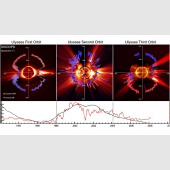
Ulysses spacecraft data indicate solar wind at a 50-year low
23 September 2008Data from the joint ESA/NASA Ulysses mission show that the Sun has reduced its output of solar wind to the lowest levels since accurate readings have become available. This current state of the Sun could reduce the natural shielding that envelops our Solar System.

Ulysses mission to conclude in July
12 June 2008After more than 17 years of operation, the joint ESA/NASA mission Ulysses will officially conclude in July this year. The remarkable achievements of this mission were recalled at a press conference held at ESA Headquarters in Paris on 12 June.
Featured Publications
Featured Publications
ESA Bulletin 136: The Epic Voyage of Ulysses
31 October 2008Ulysses has forever changed the way scientists view the Sun and its effect on the surrounding space. In the November 2008 issue of the ESA Bulletin Richard Marsden and Nigel Angold consider the epic voyage of this remarkable spacecraft.