ESA Science & Technology - Solar System
Announcements
News
News

ESA selects revolutionary Venus mission EnVision
EnVision will be ESA's next Venus orbiter, providing a holistic view of the planet from its inner core to upper atmosphere to determine how and why Venus and Earth evolved so differently.

Solar Orbiter: turning pictures into physics
Solar Orbiter's latest results show that the mission is making the first direct connections between events at the solar surface and what's happening in interplanetary space around the spacecraft. It is also giving us new insights into solar 'campfires', space weather and disintegrating comets.

SOHO's pioneering 25 years in orbit
The ESA-NASA Solar and Heliospheric Observatory (SOHO) is celebrating its twenty-fifth launch anniversary.

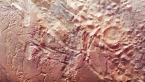
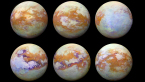
Craters reveal Titan is still a dynamic world
Using data from the international Cassini-Huygens mission to Saturn and Titan, scientists have found that there are two distinct types of craters on Saturn's largest moon Titan that are still being shaped by erosion.

Philae's second touchdown site discovered at 'skull-top' ridge
After years of detective work, the second touchdown site of Rosetta's Philae lander has been located on Comet 67P/Churyumov-Gerasimenko in a site that resembles the shape of a skull. Philae left its imprint in billions-of-years-old ice, revealing that the comet's icy interior is softer than cappuccino froth.

BepiColombo flies by Venus en route to Mercury
The ESA-JAXA BepiColombo mission has completed the first of two Venus flybys needed to set it on course with the Solar System's innermost planet, Mercury.

Solar Orbiter releases first data to the public
ESA has released its first Solar Orbiter data to the scientific community and the wider public. The instruments contributing to this data release come from the suite of in-situ instruments that measure the conditions surrounding the spacecraft.

Unique ultraviolet aurora spied at Rosetta's comet
ESA's Rosetta mission has revealed a unique kind of aurora, an exciting phenomenon seen throughout the Solar System, at its target comet, Comet 67P/Churyumov-Gerasimenko.
Watch online
Watch online

Replay: Solar Orbiter first image release
Watch a replay of the press briefing from 16 July with Solar Orbiter mission experts, who presented the unique first images from ESA's new Sun-observing spacecraft.

Replay of live discussion with BepiColombo experts
Watch the replay of the live streamed conversation with BepiColombo experts sharing their first results from the spacecraft's 10 April 2020 Earth flyby.
Spacecraft Testing
Spacecraft Testing

#8: Successful integration of JUICE's 10.6-metre-long arm
The development of ESA's JUpiter ICy moons Explorer (JUICE) is continuing apace and has hit milestones in recent months: the spacecraft's 10.6-metre-long boom is now attached, many instruments have been integrated, and the mission's high-gain antenna has arrived and undergone rigorous vibration testing.

#7: All panels delivered for JUICE's solar wings
All ten flight model solar panels for ESA's JUICE spacecraft have been delivered to Airbus Defence and Space Netherlands ready to be integrated into solar wings. The solar panels, with a total area of 85 m², are a key element of the mission, providing the necessary power to run the spacecraft and operate the science instruments.
Latest Articles
Latest Articles

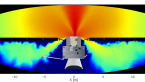
Cluster and XMM-Newton pave the way for SMILE

How Venus and Mars can teach us about Earth
One has a thick poisonous atmosphere, one has hardly any atmosphere at all, and one is just right for life to flourish – but it wasn't always that way. The atmospheres of our two neighbours Venus and Mars can teach us a lot about the past and future scenarios for our own planet.