
Giotto: comet chaser
Comet treasure: raw materials for life
Comets are intriguing objects because they are very primitive, leftover building blocks from the birth of the planets. Although they rarely strike the Earth today, impacts were once much more frequent, and probably played a significant role in our planet's evolution. Most of the water in Earth's oceans may have come from comets.
A unique opportunity to learn their secrets came in 1986 with the near-suicidal flight of ESA's Giotto spacecraft to the unexplored nucleus of Halley's Comet. A stream of discoveries followed.
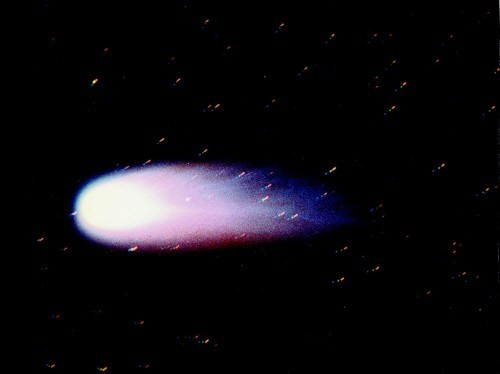
Giotto confirmed that the comet had formed 4.5 billion years ago from ices condensing onto grains of interstellar dust. Since then, it has remained almost unaltered in the cold, outer regions of the Solar System.
As expected, 80 percent of the comet gas was water vapour, with another 10 percent carbon monoxide. The only other significant constituents were carbon dioxide and polymerised formaldehyde, a non-biological organic compound made from hydrogen, oxygen and carbon.
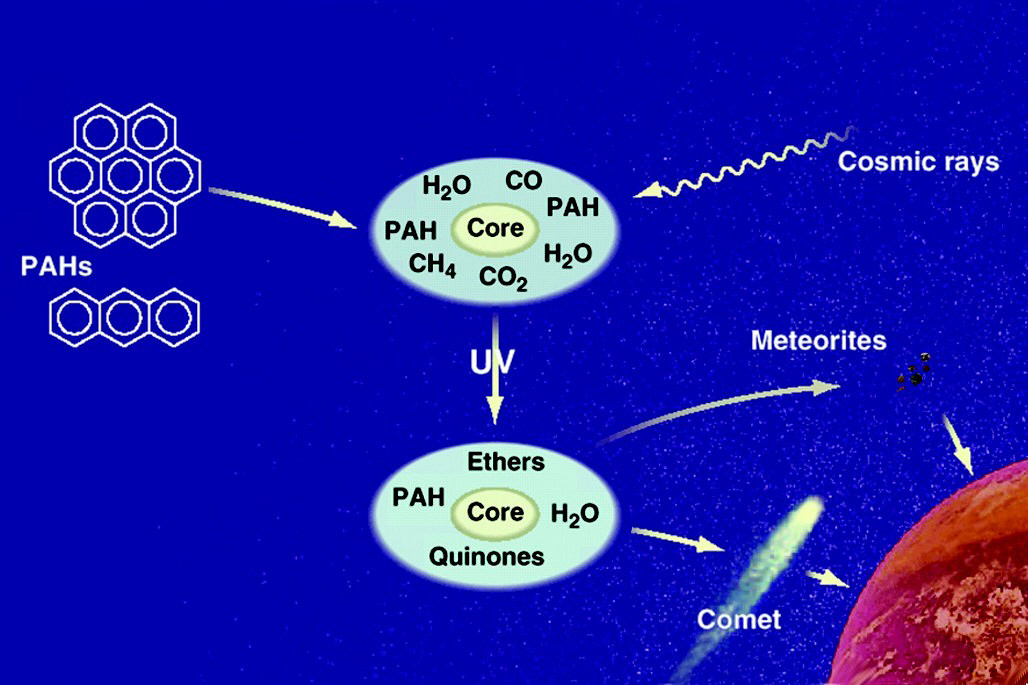
Ingredients for life on Earth may have come from space'
Analysis of Comet Halley's dust particles provided some surprising results. Tiny grains, no larger than specks of cigarette smoke, were found to be much more abundant than expected. Unlike most space dust, it was not stony but organic. Carbon was found to be a major constituent of the dust.
Many particles were similar in composition to a rare, primitive type of meteorite known as a carbonaceous chondrite. Even more surprising was the discovery of so-called CHON particles, rich in carbon, hydrogen, oxygen and nitrogen. Intriguingly, these elements are essential for life as we know it. Dust from comets could have fertilised the Earth, by supplying materials from which nucleic acids and proteins could form.
Did life on Earth start with the help of comets? If so, it almost certainly began in a similar way somewhere else. Giotto's discoveries intensified the interest in exobiology - the search for life beyond the Earth - and the question of whether or not we are alone in the Universe.
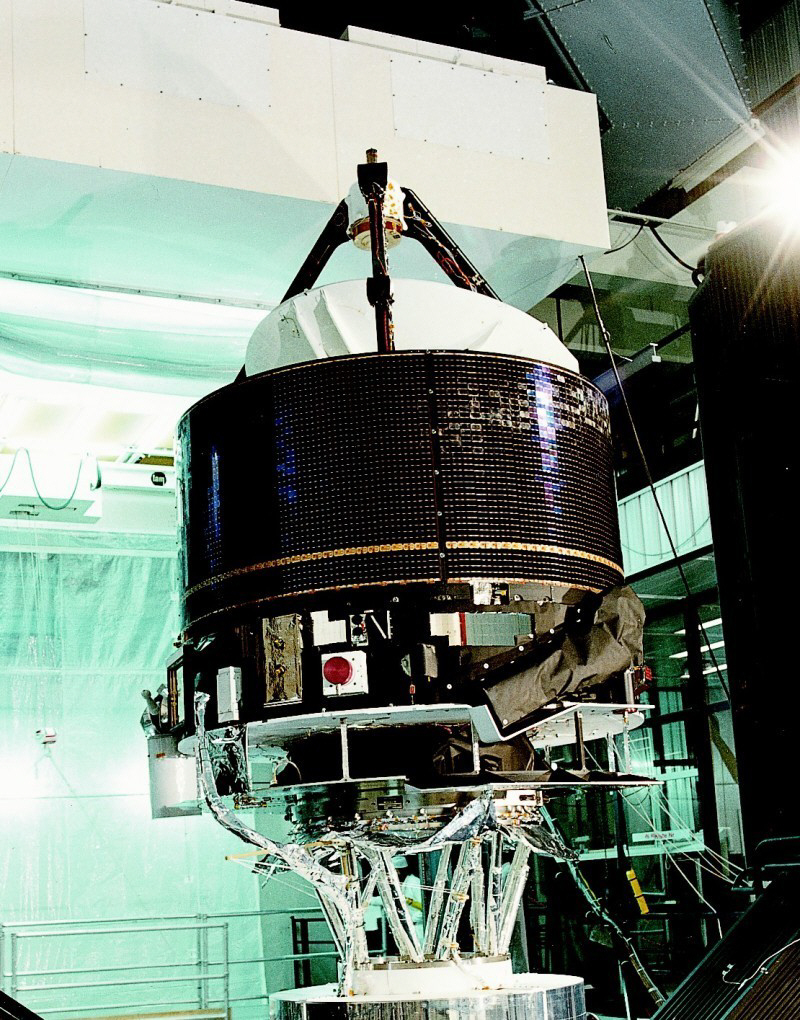
As Giotto and Halley's Comet closed at around 250 000 km/h, the ESA spacecraft suffered a peppering which left only three instruments fully functional, with five more degraded but operational. Nevertheless, it was decided to despatch Giotto on an unprecedented second comet encounter.
|
|
|
|
Fritz Neubauer | |

|

"Giotto discovered a magnetic cavity around Halley's Comet, something which has never been seen before or since," said Fritz Neubauer of the University of Cologne, Germany. "It was worth flying so close to the nucleus, even though it threatened the spacecraft, just to find a region where the magnetic field was essentially zero."
How a small comet makes huge waves
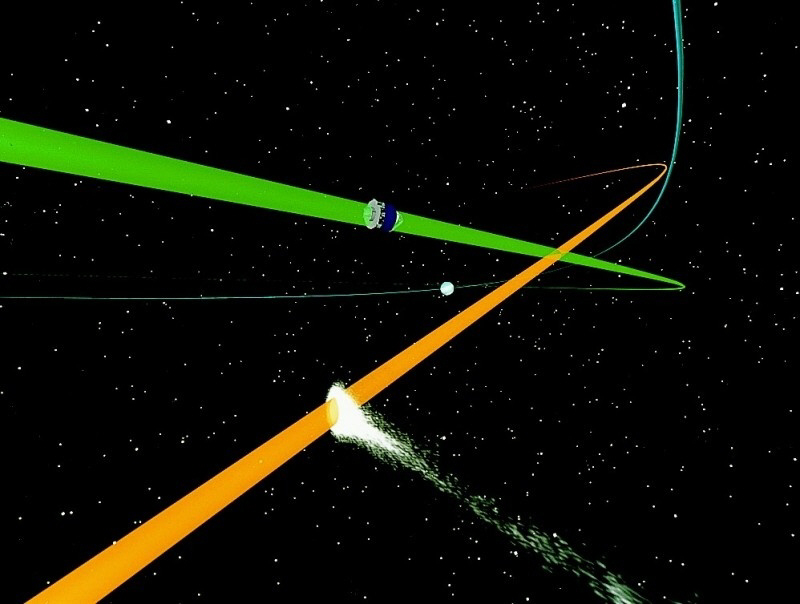
After using Earth's gravity to change orbit, Giotto encountered Comet Grigg-Skjellerup (ESA)
En route, Giotto survived two long hibernations, interrupted only by an Earth flyby on 2 July 1990 - the first time a deep space probe had received an impetus from the Earth's gravity. The resultant change in orbit enabled Giotto to pass within 200 km of Comet Grigg-Skjellerup on 10 July 1992. After the successful encounter, Giotto was once again shut down. The battered spacecraft would briefly return to Earth's vicinity on 1 July 1999.
As expected, Grigg-Skjellerup was found to be a smaller, less active version of Comet Halley. The strangest discovery was of unusual magnetic waves near the comet. Activity rose and fell over a period of about 70 seconds and increased in strength. Charged material from the comet, moving in the wind of atomic particles from the Sun, generated the waves.
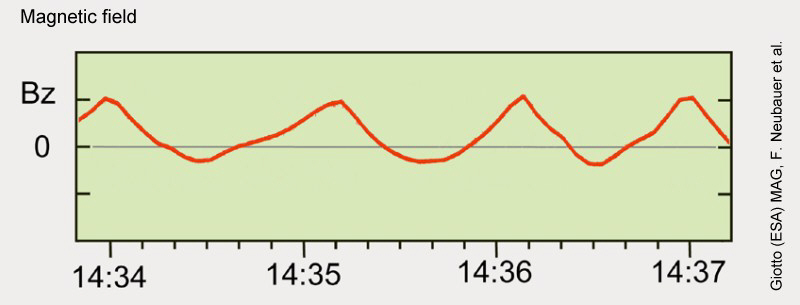
Unusual magnetic waves near Comet Grigg-Skjellerup
"At Grigg-Skjellerup the magnetic field was relatively constant and perpendicular to the flow of the solar wind, until the huge waves started," said Andrew Coates of University College London's Mullard Space Science Laboratory. "It was a text-book encounter."
|
| |
|
Gerhard Schwehm | |
|
|

"Giotto was the Agency's first planetary mission and was a tremendous success, both technically and scientifically," said Gerhard Schwehm of ESA's Space Science Department at Noordwijk in the Netherlands. "It provided a wealth of scientific results and gave scientists the unique chance to study two different comets with the same set of instruments."
The dark body of Halley's Comet unveiled
|
| |
|
Horst Uwe Keller | |
|
|

"We discovered that a comet is not really a 'dirty snowball' since dirt is dominant, not ice," said Horst Uwe Keller of the Max Planck Institut für Aeronomie, Katlenburg-Lindau, Germany. "Instead of being spherical like a warm snowball, a comet nucleus is elongated. The physical structure of a comet's interior is defined by its dust content rather than its ice content."
Since ancient times comets have been regarded with awe and wonder, portents of great political events and upheavals. Yet, until the European Space Agency's Giotto spacecraft flew past Halley's Comet in 1986, their true nature was hidden behind a vast veil of glowing gas and dust.
Giotto flew to within 600 km of the comet, revealing for the first time what the nucleus - its solid heart - was really like. Until then, most scientists accepted the model proposed by American astronomer Fred Whipple, who saw a comet as a large, dirty snowball.
A rare opportunity to test Whipple's hypothesis came with the return of Halley's Comet after a 76-year-long absence. Scientists from ESA, the USA and the Soviet bloc agreed to cooperate in investigating the icy intruder. Using positional information on the comet from two Soviet Vega spacecraft, ESA's ground control team directed Giotto towards its target. The reward came on 13 March 1986 with the most detailed pictures ever taken of a comet.
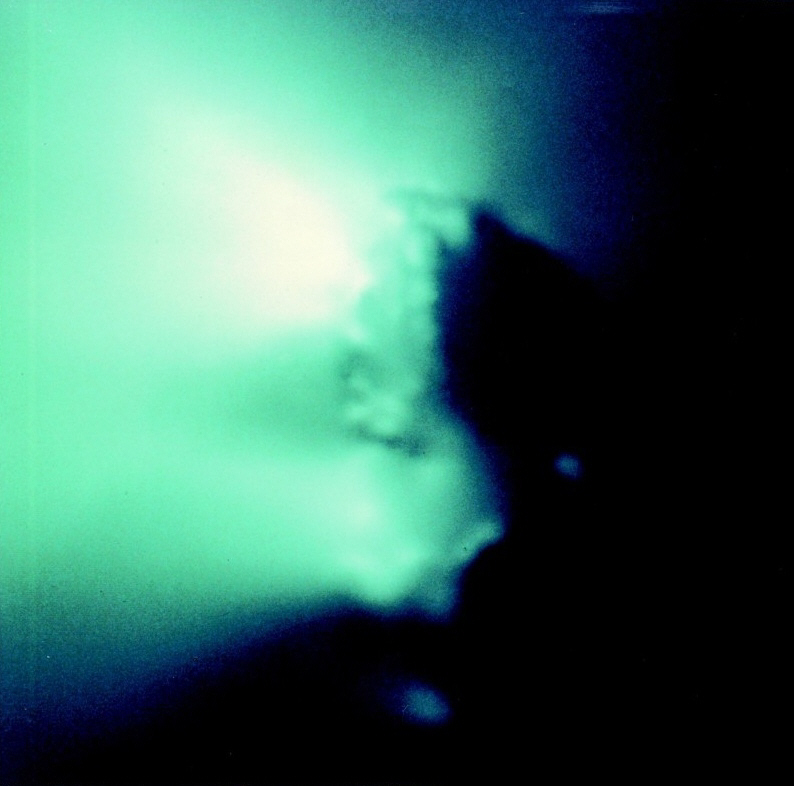
Halley's nucleus - Giotto (ESA) HMC MPAe
Giotto unveiled a small, potato-shaped object, with crater-shaped hollows and mountains. Although it was only 15 km long and 8 km wide, the nucleus was much larger than expected. However, its density was very low, suggesting a fluffy, porous texture.
Another surprise was the extremely dark surface - blacker than coal - which suggested a thick covering of dust. Several jets of gas and dust spewed into space from active regions on the warmer, sunlit side. These jets gave the comet a strange, wobbling rotation that seems to be stable over centuries or even millennia.
|
|
|
|
Susan McKenna-Lawlor | |
|
|
"EPONA has travelled further and faster than anything else ever made in Ireland," said Susan McKenna-Lawlor of St. Patrick's College, Maynooth, on the night that her instrument in Giotto took part in the historic encounter with Halley's Comet. As with all ESA science missions, scientists from many Member States shared in this first adventure in deep space, and in its harvest of results.
|
| |
|
Tony McDonnell | |
|
|

"The important thing was to go there and find out what a comet is really like," said Tony McDonnell of the University of Kent, United Kingdom. "Only with this direct exploration were we able to establish the 'ground truth'. This then opened the way for ground-based observers to apply our findings to vast quantities of data on other comets."