
PR 04-1996: SOHO, an early start, a long lifetime
24 January 1996
SOHO, the international mission led by the European Space Agency is the most comprehensive space observatory to study the Sun that has been flown to date. Thanks to a highly accurate launch it will start its scientific investigations earlier than planned and will be able to operate much longer than expected. SOHO (the Solar and Heliospheric Observatory) will probe the interior of the Sun and address many fundamental questions about our daylight star.
 |
 |
 |
 |
 |
An optimised orbit-shaping manoeuvre on 4 January, further refined SOHO's trajectory. Enough fuel remains on board to maintain SOHO's position in space for at least twenty instead of the planned six years.
All systems of the 1850 kg spacecraft designed and built by European industry have been checked after launch and are in excellent shape. Their nominal performance has allowed an early and uninterrupted start of the commissioning of the scientific payload.
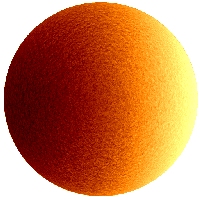
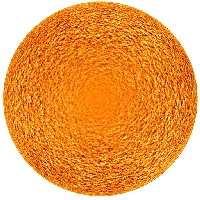
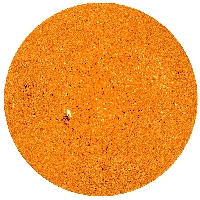
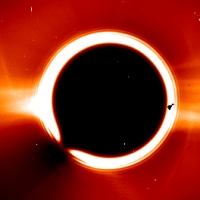
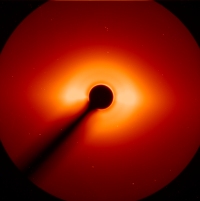
SOHO's 12 scientific instruments are currently being tested. Scientists are studying the first images and calibrating their instruments for the scheduled start of operations in late March. The craft's particle detectors investigating in-situ the solar wind streaming around SOHO at its vantage point near Lagrange point 1, have been operational for some time and SOHO's first image of the Sun was taken on 19 December 1995. "All those who have worked tirelessly on the SOHO payload, spacecraft and ground-segment are to be congratulated on their excellent work and for having developed the most remarkable tool to help us understand the Sun and its environment, the heliosphere," said Roger Bonnet, ESA's Director of Science.
According to present plans one month of early science is scheduled to begin around end of March and scientists hope to present their initial findings to the wide public by early May. SOHO is a project of international cooperation between ESA and NASA. The mission is led and coordinated by ESA who also procured the spacecraft; NASA provided the launch and operates the satellite. The European scientists who designed nine of the observatory's instruments and their US colleagues who built a further three are all present at Goddard Space Flight Center, where they jointly plan the optimum scientific use of the satellite.
The spacecraft is part of the international Solar-Terrestrial Science Programme, the next member of which is Cluster, a flotilla of four spacecraft that will study how the Sun affects Earth and surrounding space. Cluster is scheduled for launch in May 1996 on the first Ariane 5 rocket. It will be the second mission belonging to the first Cornerstone of ESA's long- term scientific programme Horizon 2000.
Complete list of all SOHO experiments and their Principal Investigators
| 1 | SUMER | Solar Ultraviolet Measurements of Emitted Radiation | PI : K. Wihelm MPAe, Lindau, Germany |
| 2 | CDS | Coronal Diagnostic Spectrometer | PI : R.A. Harrison DRAL, Chilton, UK |
| 3 | EIT | Extreme Ultraviolet Imaging Telescope | PI : J.P. Delaboudinière IAS, Orsay,France |
| 4 | UVCS | Ultraviolet Coronagraph Spectrometer | PI : J.L. Kohl SAO, Cambridge, USA |
| 5 | LASCO | Large-angle Sectroscopie Coronagraph | PI : G.E. Brueckner NRL, Washington DC, USA |
| 6 | SWAN | Solar Wind Anisotropics | PI : J.L. Bertaux CNRS, Verrières le Buisson, France |
| 7 | CELIAS | Charge, Element and Isotope Analysis System | PI : D. Hovestadt MPE, Garching, Germany |
| 8 | COSTEP | Comprehensive Supra-thermal and Energetic Particle Analyser | PI : H. Kunow University of Kiel, Germany |
| 9 | ERNE | Energetic and Polativistic Nuclei and Electron Experiment | PI : J. Torsti University of Turku, Finland |
| 10 | GOLF | Global Oscillations at Low Frequence | PI : A. Gabriel IAS, Orsay, France |
| 11 | VIRGO | Variability of Solar Irradiance and Gravity Oscillations | PI : C. Fröhlich PMOD, Davos, Switzerland |
| 12 | SOI/MDI | Solar Oscillations Investigation / Michelson Doppler Image | PI : P.H. Sherrer CSSA, Stanford University, USA |
