
About the Leonids
What are the Leonids?
The Leonids are named after the area of sky from which they seem to originate - the sickle-shaped constellation of Leo (the Lion). The famous meteor shower appears each year between 15 and 19 November, but usually the numbers are few - perhaps 20 or 30 per hour at peak times. However, every 33 years or so the shower strengthens dramatically, with thousands of glowing meteor trails illuminating the early morning skies.
|
Illustration courtesy of Sky & Telescope |
The most recent peak in the number of Leonids took place in 1999, when the shower produced more than 3000 meteors per hour. Most spectacular of all were the events of 1833 and 1966, when the sky was awash with the incandescent streamers from more than 100 000 shooting stars per hour.
Most meteors are caused by cosmic dust burning up as it enters the Earth's upper atmosphere. The dust originates from comets, which for most of their elliptical orbits remain in deep freeze, far from the Sun. When they approach the Sun, however, their icy surfaces are warmed and start to vapourise, generating powerful jets of gas and dust which spurt into space. The dust which is ejected eventually spreads out around the comet's orbit.
The periodic bursts of activity that are observed in the Leonids are tied to the motion of comet P/55 Tempel-Tuttle, which returns to the vicinity of the Earth and the Sun every 33 years. Like a gigantic chimney travelling through space, the comet belches out a dense cloud of gas and dust each time that its icy nucleus vapourises in the heat of the Sun. When the Earth ploughs headlong through this cloud, frictional heating incinerates any debris that enters the atmosphere, producing the annual Leonid light show.
|
Figure 2 - Right. 17 November 1966, New Mexico State University Observatory, A. Scott Murrell | |
|
Figure 1 - Left. The great Leonid shower storm of 1833 (Reproduction of a wood-cut engraving by Adolf Vollmy based upon an original painting by the Swiss artist Karl Jauslin) | |
The reason for the Leonids unpredictable behaviour is that, although the main stream of debris from comet P/55 Tempel-Tuttle trails for millions of kilometres behind the comet, it is not very wide, perhaps 35 000 km across. Within this narrow stream, the dust ejected during each of the comet's close approaches to the Sun forms a series of separate ribbons. Their characteristics vary considerably. Generally, the most recent dust streamers are thin and dense, while the older material, which has had time to spread out, forms wider, less densely populated bands.
|
|
|
Figure 3. The train of a Leonid fireball seen over Spain during the 1996 shower (Photograph: Volker Gerhardt) |
The location of the stream also changes with time as the gravity of the planets, especially Jupiter, exerts an influence. Sometimes the Earth ploughs right into a dense stream of debris, causing a storm of bright meteors. Sometimes it misses almost all of the tightly confined dust trail, resulting in very few meteors that can be seen.
The Leonids are renowned for producing bright fireballs, which outshine every star and planet. Their long trails are often tinged with blue and green, while their vapour trains may linger in the sky for five minutes or more. Although the incoming particles are small, ranging from specks of dust to the size of small pebbles, the Leonids glow brightly because they are the fastest of all the meteors. A typical Leonid meteor, arriving at a speed of 71 km s-1, will start to glow at an altitude of about 155 km and leave a long trail before it is extinguished.
The reason for this high-speed encounter is that, like their parent comet, the particles travel around the Sun in a direction almost directly opposite to the orbital motion of the Earth. The result is a head on collision with a high relative velocity between the planet and the comet's dust trail.
The unpredictable Leonids
Based on past behaviour, a meteor storm was predicted for 1998 or 1999. In the year 1999, some very bright fireballs appeared unexpectedly 18 hours before the predicted maximum. They were associated with a previously unknown dust band which had been shepherded into a narrow stream by Jupiter's gravity. Unfortunately, although there was also a peak in meteor activity at the predicted time, their trails were not very bright and hard to see with the naked eye.
In 1999, although the Earth reached Tempel-Tuttle's orbit 622 days after the comet passed by, it was predicted that the distribution of its dust ribbons would leave a notable display. One encouraging sign was that the 1998 shower was similar to that of 1965, the year before the storm of 1966. Most astronomers were not expecting a comparable display in 1999, but a spectacular show was not ruled out.
It was foreseen that activity would reach a peak on the night of 17 - 18 November, though earlier fireballs were always a possibility. Nothing was to be visible until the 'sickle' of Leo rised above the eastern horizon around 22:30 GMT. At first, the fainter meteors would be swamped by light from the first quarter Moon, but once this set soon after midnight, conditions were thought to be ideal as long as the sky is cloud free.
The maximum activity was predicted to occur around 02:00 GMT on 18 November, at the time when the Earth passed closest to the comet's orbit. At this time, Leo was well above the horizon over Western Europe.
It was also thought that light trails left by fast-moving meteors may be seen in any part of the sky, but, if traced backwards, they would all seem to originate in the same place - the constellation of Leo. However, appearances are deceptive. Although they appear to spread out like spokes of a wheel, the trails are actually parallel to each other. They just seem to splay out because of our viewing perspective, just as railway lines appear to diverge as they come closer to us.
Some scientists predicted that 2000 or 2001 would provide even better viewing opportunities for the Leonids, but no-one was sure if these unpredictable cosmic visitors would live up to expectations.
"We just know from past history that, in the two years after the perihelion of Comet Tempel-Tuttle, there is enhanced activity," said Dr. Walter Flury of the European Space Operations Centre.
"A storm is possible, but these things are very uncertain," he added. "Predictions are based on models of the way material is distributed along the comet's orbit. But the models are quite inaccurate. We just don't have enough information."
ESA scientists seek to study the Leonids
ESA scientists intended to be ready, if the storm materialised. Armed with a variety of equipment, including image-intensifier video cameras, CCD cameras with wide-angle lenses and a spectrograph, they were planning an observational campaign at two observatories in southern Spain (Calar Alto and Sierra Nevada) from 11 to 19 November.
 |
|
|
Figure 4. Calar Alto Observatory |
Figure 5. Sierra Nevada Observatory, Spain |
The main science goals were:
- to determine the varying rates in the number of meteors and their magnitudes (visual brightness)
- to study the physical properties of individual meteors by measuring their light output and changing velocity, then compare these to other meteor streams
- to use the 1.5 m telescope at the Sierra Nevada Observatory to perform spectroscopy of persistent trains and so determine their composition.
|
|
|
Michael |

There was also an ESA scientist with a meteor camera on board an aircraft operated by the American SETI (Search for Extraterrestrial Intelligence) Institute. Results from the meteor count experiments were sent to the European Space Operations Centre (ESOC) in Germany so that spacecraft operators could determine the level of threat posed by the space dust.
Meteors, comets and space missions
There are two main reasons why scientists study meteors: the potential threat they pose to Earth-orbiting satellites, and the clues they hold about the formation of the planets.
Although they are very small, the tremendous speed of the Leonids means they pack a mighty punch. Apart from knocking a spacecraft off alignment or causing physical damage in the form of an impact crater, such collisions can also generate a cloud of plasma (gas composed of neutral and electrically charged particles) which may cause electrostatic discharges or damage a spacecraft's sensitive electronics.
This threat is not simply theoretical. In 1993, a European Space Agency satellite called Olympus spun out of control, possibly as the result of an electrical disturbance caused by the impact of a particle from the Perseid meteor shower.
The situation back in 1999 was further complicated by the fact that there were more satellites in orbit around the Earth than ever before, all of which posed a tempting target for one of nature's miniature missiles. Despite this spacecraft population explosion, few, if any, satellites were likely to suffer significant problems from meteors, even during a storm. Researchers estimate that the chance of one getting hit by a Leonid meteor was only about 0.1 percent.
This low hit rate was born out by an absence of damage during the 1998 Leonids event. Nevertheless, driven by uncertainty over the future of their high-tech hardware, satellite operators were once again taking precautions to protect their multi-million dollar charges.
"There could be a lot of activity, but we just don't know for sure," commented Walter Flury. "It's better to take precautions now than be sorry later."
The ESA Space Science Department was to provide information on meteor numbers every 15 minutes for the European Space Operations Centre (ESOC) at Darmstadt in Germany. Using this data and radar counts from other sources, ESOC would have been able to issue a security alert, warning spacecraft operators to power down their spacecraft or turn them away from the storm.
One of the largest targets, the NASA-ESA Hubble Space Telescope was to be manoeuvred so that its mirrors faced away from the incoming meteors and its solar arrays are aligned edge on to them. These precautions would continue for several Earth orbits, a duration of seven hours, during the Leonids' predicted peak.
Apart from reducing the exposed area of giant solar arrays, operators could have shut off power to vulnerable electrical components of satellites. In the case of ESA's two European Remote Sensing (ERS) satellites, all of the science instruments were to be switched off during the peak of the Leonid activity. At the same time, their power levels were to be monitored and measures were to be taken to reduce the possibility of electrical discharges and unexpected changes in attitude.
Even spacecraft located some distance from the Earth were at risk. ESA's Solar and Heliospheric Observatory (SOHO) studied the Sun from a vantage point 1.5 million kilometres away, but it, too, was rolling so that its main navigational aid, the star tracker, was pointing out of harm's way.
Meteors, comets and the Rosetta Mission
Meteors are also objects of fascination for purely scientific reasons. Most of the particles which produce meteors have been ejected by comets passing through the inner Solar System. Since comets are thought to be left-overs from the formation of the planets, studies of meteors allow scientists to learn more about the physical and chemical characteristics of their 4.5 billion year-old parents.
 |
|
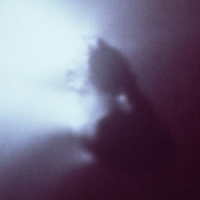
Figure 6. The Halley comet nucleus imaged by Giotto during its flyby |
However, there are limits to such ground-based observations. The only way to study comets at first hand is to send a spacecraft to study them at close quarters. ESA's Giotto spacecraft paved the way with the first close flyby of a comet (Halley) in 1986.
An even more ambitious and exciting project has been planned by ESA - the Rosetta mission to Comet Churyumov-Gerasimenko. Launched in 2004, Rosetta will spend eight years circling the Sun before it closes in on Churyumov-Gerasimenko's icy nucleus. After entering orbit around the comet, it is planned to drop a small lander onto the comet's black nucleus to provide information on its composition, temperature and density.
Over the next two years, the mother spacecraft would orbit just one kilometre above the nucleus, monitoring the changes which take place as it heads towards the Sun and starts to vapourise. If the spacecraft survives its long trek through space and its buffeting from gas and dust jets spurting from the nucleus, it will make the first detailed record of the transformation that takes place when a comet switches from frozen inactivity to boiling effervescence.