
SMART-1 Mission Review
4 September 2006
In a press conference, held at ESOC on 4 September, the key success of the SMART-1 mission from an operational, technical and scientific perspective were presented. In addition results from the last few days and weeks of observations were presented.Recent Results
Click on an image in the results below to access either a movie (in AVI format) or a high resolution image. Some of the files are large and may take a short while to download.
|
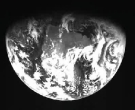
Earth Rise! | |
|
Date: 29 August 2006, 19:00 UT |
 |
|
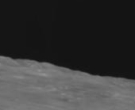
Lunar Surface | |
|
Date: 2 September 2006, 15:19 - 17:34 UT |
 |
|
South Pole-Aitken Basin | |
| Date: Instrument: AMIE Target: South Pole-Aitken Basin at 173.4° E & 16.8° S Type: Image Description: The Aitken Basin is the largest and oldest known impact crater basin in the solar system and the deepest depression in the Moon. The basin is 2600 km in diameter and extends from the South Pole to the Aitken Crater. AMIE was able to image the area under ideal illumination conditions, which will afford scientists an opportunity to compare AMIE images with existing data of the same area gathered by previous lunar missions. |
 |
|
Illumination conditions at North Pole | |
| Date: 2005 Instrument: AMIE Type: Image Description: This mosaic is valuable as it shows illumination conditions at the region. It is important to understand global illumination conditions to help in planning the location of future landing sites and, later, possible bases, on the Moon. |
 |
|
Radio Observations | |
|
Date: 3 September 2006 |
 |
Overview of Mission Operations
The SMART-1 mission operations were run from ESOC at Darmstadt and fell into three distinct categories:
- Operate the Electric Propulsion and get to the Moon
- Collect and analyse technology demonstration data
- Run Moon scientific operations maximising recovery of data
To successfully operate this programme, particularly during the Earth bound phase of the mission, a number of ground stations across the globe were used.
Learning to Fly
Throughout the mission ground control teams had to learn to fly with an ion drive and plan for gravitational resonances with the Moon - small changes in applied thrust could mean the recalculation of entire schedules.
At the Moon
Once at the Moon, the SMART-1 mission was extended several times utilising every possible means to maximise the overall duration and guarantee an impact on the lunar near side. This last tasks, due to the lack of fuel onboard, was achieved through a complex series of reaction wheel offloadings lasting 65 orbits.
Final Orbits
Having performed a correction to bring the impact onto the lunar near side a final manoeuvre was required just 36 hours before impact. Detailed analysis of the projected impact region suggested a crater rim on an earlier orbit might be higher than originally anticipated. One final alteration was required to boost the perilune of the penultimate orbit by 600 m.
Overview of Mission Technology
The SMART-1 technology goals have been fully achieved:
- Earth-Moon transfer powered by Solar Electric Primary Propulsion and making use of the lunar gravity assists
- Moon orbit maintenance during scientific operational phase using Electric Propulsion
- Technology Demonstration in:
- - New communication techniques: Laser link & Ka band antenna
- Autonomous navigation: OBAN
- Miniaturisation: x-ray & infrared spectrometers
- Novel spacecraft technologies: on-board computer & lithium ion batteries
Ion Drive
On SMART-1, Solar Electric Propulsion has been used as primary propulsion system for the first time on a European spacecraft. This is an important step for future interplanetary missions because:
- A much lower propellant mass is needed
- Long trips in shorter time are possible
- Less constraints are imposed on launch windows
- A larger choice of target destinations is offered
- Manoeuvrability and flexibility are enhanced
Timeline
| Mission Day |
Date | Event |
|
1 |
27 September 2003 | Launch |
|
3 |
30 September 2003 | First Engine Ignition |
|
412 |
12 November 2004 |
Moon Injection after |
|
532 |
12 March 2005 |
Lunar Operational Orbit |
|
721 |
17 September 2005 | Last Engine operation |
|
1072 |
3 September 2006 | Moon Impact |
Overview of Mission Science
Mini-Instruments European Technologies
Due to the compact nature of the SMART-1 spacecraft and launch mass contraints the instrument payload had to weigh no more than 19 kg.
| Instrument | Nation | Mass |
| D-CIXS - Spectrometer | UK | 5.2 kg |
| XSM - Solar x-ray monitor | Finland | |
| SIR - Infrared Spectrometer | Germany | 2.3 kg |
| AMIE - micro camera | Switzerland | 2.1 kg |
| SPEDE - Spacecraft Potential Electron Dust | Finland | 0.8 kg |
| EPDP - Electric Propulsion Diagnostics Package | Italy | 2.4 kg |
| KATE - Deep Space Communications | Germany/ESA | 6.2 kg |
| RSIS - radio science | Italy |
Science & Exploration Themes
- How do Earth like Planets work?
- Geophysical observations: volcanism, tectonics, craters, erosion, space weather, ices
- How do Rocky planets form and evolve?
- Geochemistry: chemical composition, Earth-Moon origin, Moon evolution, accretion, collisions, giant bombardment
- Preparing Future Lunar/Planetary Explorations
- Lunar Resources Survey: minerals, volatiles, illumination
High Resolution Maps: for future landing sites
Support to future missions and lunar exploration - Public Outreach, inspiration and education