
Former PIs
PI for CIS until 2005
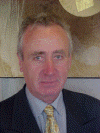 |
Henri Rème
Nationality: French
One of 11 principal scientific investigators on the Cluster mission, Professor Rème has spent almost four decades studying space plasma and planetary physics.
At the beginning of the 1960s, he held a research position from the Commissariat à l' Energie Atomique, where he gained a doctorate in Nuclear Physics (1963). After a brief period as assistant professor at Toulouse University, he was placed in charge of research at the Centre National de la Recherche Scientifique in Toulouse. In 1969 he became Docteur d' Etat des Sciences Physiques.
Since 1971, he has been a Professor at Paul Sabatier University, Toulouse. During this tenure, positions of responsibility held include: Chief of the Physical Measurement Department, Toulouse Institute of Technology (1972-1977); Director of the Toulouse Institute of Technology (1977-1981); Deputy Director of the Centre d' Etude Spatiale des Rayonnements, Toulouse (1983-1991); and Director of the Instrumentation and Measurements Laboratory at Toulouse University (1988-1996).
Since 1995 he has been Director of Doctoral Studies in Astrophysics, Geophysics, Planetology, Space Instrumentation and Science at Toulouse University.
Rème's special research interests include the magnetosphere, solar wind, cometary and planetary plasma, energetic particle phenomena and planetary physics. This has led to his participation in numerous French, European, American and Russian scientific space research projects.
In order to study the nature of auroras and the physics of the Earth's magnetosphere, Rème has participated in experiments on sounding rockets and space missions such as ARAKS, ISEE, GEOS, Calipso-2 and Aureol. He was part of the team which discovered the plasma sheet boundary layer of Earth's magnetosphere.
In the 1980s, as a Principal Investigator on ESA's Giotto mission, he made some significant discoveries about the interaction between the solar wind and comets, and detected the presence of complex organic molecules at Halley's Comet.
"The Giotto mission was particularly important because it was the first time we had ever studied two comets from close range," said Rème. "It is extremely fascinating to be among the first in mankind's history to visit unexplored bodies like comets and planets."
More recently, he has been involved in the discovery of the paleo-magnetic field on Mars.
Apart from his role as a Principal Investigator on Cluster, he is currently a Lead Investigator on NASA's Wind and Mars Global Surveyor spacecraft, and the ESA Rosetta mission to Comet Wirtanen. He is also involved in the Russian Interball mission to study Earth's magnetosphere, and the Cassini mission to Saturn.
Rème is a member of ESA's Solar System Working Group and the International Academy of Astronautics. Since 1991 he has been Chairman or Vice-chairman of the Astronomy section of the French National Council of Universities. His honours include a diploma of the Academy of Sciences of Soviet Union (1971), the Medal of Centre National d'Etudes Spatiales (1973) and the Medal of 'Jeunesse et Sports' (1977). He has been an officer of the Palmes Academiques since 1989.
PI for DWP until 2011
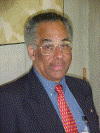 |
Hugo Alleyne
Nationality: British and Dominican
Dr. Alleyne was born in Dominica in the West Indies and has lived in several of the English speaking islands.
He was educated at the University of the West Indies, then a College of the University of London. Inspired by Professor Ray Wright he went on to obtain an MSc in Ionospheric Physics. In 1967 he joined Professor Tom Kaiser's group on a scholarship from the Ministry of Overseas Development, to do research for his PhD.
This was at an exciting time when satellites were just beginning to be used for magnetospheric research. Although his main area of research was the investigation of periodic winds in the mesosphere and lower ionosphere using meteor radar, he developed an interest in space instrumentation in discussions with colleagues about Langmuir probes, mass spectrometers and VLF receivers for satellites and rockets.
In 1970 he returned to the University of the West Indies where, while developing courses in electronics, control and instrumentation, he installed a meteor radar and worked on the propagation of atmospheric tides using meteor radar, ionospheric drift and laser radar techniques.
During this period he maintained his contacts with Tom Kaiser and Les Woolliscroft at The University Of Sheffield, spending many summers working with the Space Physics group.
He also spent sabbaticals at Georgia Institute of Technology in Atlanta, the University of Waterloo in Canada, the University of Illinois in Champaign-Urbana and 1974-76 was a member of a working group on the Antarctic and Southern Hemisphere Aeronomy Year.
In 1988 he joined The University Of Sheffield to work on data from the AMPTE satellite and on Cluster, and is now head of the Space Instrumentation and Physics group in the Department of Automatic Control and Systems Engineering.
Apart from the Cluster mission, he is also a Co-Investigator on the NASA Cassini mission to Saturn, ESA's Rosetta mission to Comet Wirtanen and SMART-1. He is also involved in the Russian Interball mission and the Ukrainian Variant mission and was Co-I on the Russian Mars96 mission.
PI for EDI until 2005
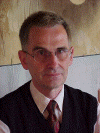 |
Götz Paschmann
Nationality: German
Dr. Paschmann is a researcher at the Max-Planck-Institut für Extraterrestrische Physik (MPE), Garching, Germany, since 1965, when he joined the institute as a graduate student and later became a staff member. He is currently head of the Space Plasma Group.
Since 1999 he has also been a director at the International Space Science Institute (ISSI) in Bern, Switzerland, and now divides his time evenly between Garching and Bern.
His interest in the Cluster mission dates back to 1982, when he was a co-proposer of the mission to ESA. In 1987 he became the leader of a team of scientists and engineers from research groups in the US and Europe that proposed and built the EDI instruments.
He has previously been Principal Investigator for plasma and electric field instruments on ISEE-2, AMPTE-IRM and Freja. More recently, he was a Principal Investigator on Equator-S, a small-spacecraft mission carried out by MPE that provided the opportunity for a test flight of the EDI instrument.
PI for EFW until 2000
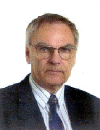 |
Georg Gustafsson
Nationality: Swedish
Dr. Gustafsson was born in Tavelsjv, Sweden. He graduated from the University of Uppsala in 1957 and went on gain his doctorate from the University of Umee in 1970, writing a thesis entitled 'Precipitation Patterns of Auroral Particles in the Ionosphere'.
While employed as a scientist at the Swedish Institute of Space Physics, Kiruna (1958-1982), he spent time in the United States on a number of occasions. In 1972 he resided at Goddard Space Flight Center, Maryland to complete a one year postdoctorate course. In 1975 he spent three months as a visiting scientist at the University of California, San Diego. This was followed by a six month spell as visiting scientist at the Applied Physics Laboratory, Maryland (1978-1979).
In 1983 he was appointed senior scientist at the Swedish Institute of Space Physics, and has held the position of Professor in the Uppsala Division since 1985. He was also Head of the Uppsala Division of the Institute of Space Physics 1991-1996.
He is currently a member of the Royal Swedish Academy of Science, the International Academy of Astronautics, the American Geophysical Union, the European Geophysical Union, and the NASA Magnetosphere and Plasma Working Group.
Dr. Gustafsson specialises in research into electric and magnetic phenomena in space. While in Uppsala, he carried out experimental research in Space Plasma Physics based on electric and magnetic field observations, with research topics related to waves, particularly Alfvén waves. As the leader of ground-based observations in Kiruna, he was involved in optical studies of aurorae, as well as magnetometer and riometer observations, with research topics related to magnetosphere ionosphere coupling. He was also responsible for developing a widely used magnetic co-ordinate system called Corrected Geomagnetic Co-ordinates.
Dr Gustafsson has been involved in a number of European and American space projects. During the 1980s he was Assistant Project Scientist for the Swedish Viking magnetospheric mission and Principal Investigator for its V4L electric field experiment. He was also Co-investigator on the Viking magnetic field experiments and auroral imager, as well as the Freja mission (a Swedish-German satellite that studied the magnetosphere). Around the same time, he was a member of the NASA working group who defined the scientific payload for the first NASA Spacelab Mission.
He is a former Principal Investigator for the EFW electric field experiment and currently Co-investigator on the EFW, STAFF, DWP, Whisper and WBD wave experiments on Cluster. Other missions on which he is presently working are NASA's Polar mission to study aurorae and the magnetosphere; the Cassini mission to Saturn, on which he is a Co-investigator for the Radio and Wave Experiment; and ESA's Rosetta comet mission, on which he is Co-Investigator for the Langmuir Probe Instrument.
PI for FGM until 2005
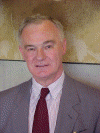 |
André Balogh
Nationality: British
Professor Balogh was born in Hungary. He left his homeland in 1956 and continued his education in France, where he obtained the Diplome d'Ingénieur Civil des Télécommunications in 1964.
He then joined the Cosmic Ray Group in the Physics Department of Imperial College, London as a Fellow of the European Space Research Organisation (ESRO). From 1966, he was a member of the research staff that worked on energetic particle detectors for ESRO's early scientific satellites, ESRO 2 and HEOS 1 (the first European satellite with an orbit that reached into interplanetary space).
Since then, André Balogh has participated in numerous scientific space missions. Following the launch of HEOS-1 in 1968, he worked on the analysis of energetic solar particle data. In the early 1970s, using the experience gained with the HEOS instrument, Balogh designed the three-telescope low energy proton spectrometer for NASA's ISEE-3 mission. This instrument, built in cooperation with the Space Research Institute, Utrecht, and the Space Science Department of ESA, had a high time resolution (still unequalled today) for measuring the directional (pitch angle) distribution of low energy protons in space.
The data from the low energy particle spectrometer on ISEE-3 led to a series of papers on how particles gain energy by interacting with interplanetary shock waves.
Meanwhile, from 1977, Balogh and others were already working on two instruments (the magnetometer and an energetic particle detector) for the mission that was to become Ulysses, the first spacecraft to fly over the poles of the Sun. Ulysses was eventually launched in October 1990, leading to a long awaited harvest of discoveries on the properties of the heliospheric magnetic field away from the ecliptic plane. Over the past ten years, Balogh has contributed to many research publications based on Ulysses data.
Participation in the (later cancelled) NASA Comet Rendezvous and Asteroid Flyby mission led to development of a magnetometer for deep space missions, which is now flying on the Cassini Saturn orbiter mission. At the same time, the Cluster project started and, in 1987, Balogh became Principal Investigator for the magnetic field experiment.
After the Ariane-5 launch failure in June 1996, Balogh strongly supported the rebuilding of the Cluster mission. A new Cluster magnetometer team has now successfully redesigned and rebuilt the instruments that should provide a quantum leap in our understanding of the Earth's magnetosphere.
Aware through long experience that some space programmes need a long preparation, the Imperial College space research group is now involved in the ESA Rosetta Cometary Rendezvous mission that will only bring fruit from 2011. Balogh is also a strong advocate of an ESA mission to Mercury, in the hope of understanding its puzzling magnetic field.
As Professor of Space Physics at Imperial College, Balogh has taught undergraduate courses in space physics, instrumentation and control and electronics and supervised 11 postgraduate students on topics related to heliospheric phenomena.
PI for FGM 2005 - 2012
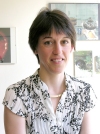 |
Elizabeth Lucek
Space Physics Group, Blackett Laboratory, Imperial College, London, United Kingdom
Nationality: British
"I had wanted to pursue research in Physics ever since I was at school, and so, while in my final year of my degree at Imperial College London, I visited the Space and Atmospheric Group of Imperial and was immediately hooked!", says Elizabeth Lucek. Her PhD was in the use of interplanetary scintillations (the twinkling of radio sources) to map solar wind transients for application in geomagnetic forecasting. In 1994, soon after completing this, an opportunity arose for a postdoctoral position on the 'soon to be launched' Cluster mission, working together with the original FGM PI, Professor Andr Balogh. "This was my perfect job, and I jumped at the chance", says Elizabeth.
The four spacecraft composing the Cluster mission were destroyed due to the failed maiden flight of the Ariane 5 launcher, in June 1996. Since then, she has studied a range of space plasma physics topics including the properties of interplanetary shocks and interaction regions, characteristics of waves in the Earth's magnetosheath, and sub-structure of the magnetopause, using data from several spacecraft, including Ulysses and Equator-S.
Following the successful launch of Cluster-II, Elizabeth started working on processes at the Earth's bow shock, in the magnetosheath and at the magnetopause using the first ever simultaneous four-point measurements performed by the Cluster satellites. She became a FGM co-investigator (Co-I) in May 2002 and in 2004, Elizabeth was awarded the COSPAR Zeldovich medal. The Zeldovich Medals are conferred by the Russian Academy of Sciences and COSPAR to young scientists for excellence and achievements. In March 2005, she became PI of the FGM experiment when Professor Balogh retired (see related article "PI for FGM until 2005" on the right-hand side).
"I feel immensely privileged to be asked by Andr Balogh to be PI for FGM after his retirement, and it was something that I could never have imagined at the time of the launch failure of Cluster-I back in 1996 when I was a young researcher who had only worked on the Cluster mission for a few months. Cluster is a truly ground-breaking mission and I am still excited by what can be discovered using multi-spacecraft data," says Elizabeth.
Dr. Lucek is also a Co-I on the CIS instrument, and for FGM and CIS on the Double Star CNSA/ESA mission. In addition to her involvement in Cluster, Elizabeth is a Co-I of the magnetic field experiment on the first ESA mission to Mercury: BepiColumbo. She now holds an Advanced PPARC Fellowship at Imperial College, London.
During her spare time, she enjoys music and the arts, and tries to take advantage of the wealth of events held in London. Away from London, she enjoys walking, in Snowdonia and the Lake District in particular.
PI for STAFF until 2011
 |
Nicole Cornilleau-Wehrlin
Nationality: French
Dr. Cornilleau-Wehrlin was born in Neuilly sur Seine (Paris area).
She spent 3 months at the University of California, Los Angeles in 1973 before obtaining her PhD in Physics in 1980 at Paris University. She later had one year at Boston University in 1986/1987.
Since 1974 she has worked in the field of space plasma physics, working particularly on wave-particle interactions and the dynamics of space plasmas involving interactions between the solar wind and the magnetospheres of the Earth and other planets.
Today, she is a senior research scientist responsible for the Waves in Natural Plasmas department at CETP (Centre d'étude des Environnements Terrestre et Planétaires), France.
Apart from her role as Principal Investigator on Cluster, she is a Co-Investigator for the wave experiments on the ESA/NASA Ulysses mission and the NASA-ESA Cassini-Huygens mission to Saturn.
She has previously been Co-I on the ESA GEOS-1 and -2 missions.
PI for WBD until 2006
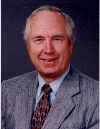 |
Donald Gurnett
Nationality: American
Professor Gurnett was born in Cedar Rapids, Iowa, in the United States.
He started his science career by working as a student employee on spacecraft instrumentation design in the Iowa Physics Department in 1958, shortly after the launch of America's first satellite, Explorer 1. After completing his Bachelor of Science in electrical engineering, he transferred to physics, in which he received his Master's degree and doctorate.
After spending one year (1964 - 1965) as a NASA Trainee at Stanford University, he was appointed Assistant Professor at the University of Iowa, with subsequent promotions to Associate Professor in 1968 and then to Professor in 1972. Since then he has taken one year out as an Alexander Von Humbold Senior Scientist at the Max-Planck-Institut in Garching, Germany, and one year on leave as a visiting professor at the University of California, Los Angeles.
Gurnett specialises in the study of space plasma physics and radio emissions, and has participated as a Principal Investigator or Co-Investigator in over 25 major NASA spacecraft projects, most notably the Voyager 1 and 2 flights to the outer planets, the Galileo mission to Jupiter, and the Cassini mission to Saturn.
His research group also has a long history of involvement in European space missions. These include instruments on the Helios 1 and 2 spacecraft, which flew closer to the Sun than any other spacecraft; the ISEE 1 and 2 spacecraft, which in many respects were the predecessors of the Cluster mission; the AMPTE spacecraft, which were the first to produce and study artificial comets in the solar wind and Earth's magnetosphere; and most recently, the Mars Express mission, which is to be placed in orbit around Mars in 2003.
"When the Cluster opportunity was first announced in 1987, it just seemed natural for us to propose an instrument," he said. "Thankfully, we were selected to provide an instrument for this very important mission. By providing multi-point measurements on small spatial scales, Cluster will open a new era in magnetospheric plasma research."
Professor Gurnett is the author or co-author of over 370 scientific publications, primarily in the area of magnetospheric radio and plasma wave research.
He has received numerous awards for his research and teaching. These include the 1978 John Howard Dellinger Gold Medal from the International Scientific Radio Union, the 1989 John Adam Fleming Medal from the American Geophysical Union, and the 1989 Excellence in Plasma Physics Award from the American Physical Society. In 1998 he was elected to the U.S. National Academy of Sciences.
PI for WHISPER until 2007
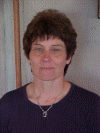 |
Pierrette Decreau
Nationality: French and Swiss
Dr. Decreau was born as Pierrette Prior in Paris, France. A graduate in Engineering at the Ecole Supérieure d'Electricité, and in Physics at the Université Paris VI and the Université d'Orléans, she has devoted her career to studying the Earth's magnetosphere and the plasmas (gases composed of electrically charged particles) in the near-Earth environment.
Her first research position was in the GRI (Groupe de Recherche Ionospheriques) at St Maur des Fossés near Paris, designing particle analysers.
After moving to Orléans in 1971, she took up a teaching position at the Université and began to conduct research at the Laboratoire de Physique et Chimie de l'Environnement in C.N.R.S. Orléans.
Her research centred on studies of the Mutual Impedance technique, an active radio frequency probe which involved experimental work in a plasma chamber. She was soon responsible for the Mutual Impedance instrument on the GEOS 1 and 2 satellites. This studied the thermal population in the region surrounding the Earth known as the plasmasphere, and led to the discovery of 'cold' electrons which are hidden to particle analyser techniques.
In 1984 she spent a year in Huntsville, Alabama, continuing her research into the behaviour of thermal plasma. On her return, she worked as a Co-Investigator on the Swedish Viking mission to study thermal plasma in the Earth's magnetosphere.
This was followed by her appointment as P.I. for the WHISPER instrument on Cluster in 1987. Today, she is Mantre de confirences at the Université d'Orléans. Apart from being involved with her teaching at the University and the Cluster project, she is also a Co-Investigator on ESA's Rosetta mission to Comet Wirtanen.
Even today, few women take up careers in science and technology, so how did she get interested in particle physics and space exploration?
"This is a mixture of being a dreamer, being born in a favourable environment, and chance circumstances," she said.
"I've always been fascinated about the mysteries of our world, and may have inherited the spirit of exploration. Science and technology seemed a good route to follow."
"I was indeed baffled to discover how few (3!) girls were among my companion students in engineering (numbering 300!). Nowadays, this terrible situation is improving for the best."
So why space?
"I need the beauty and soothing of Nature. I thought about oceanography, mining or petroleum research. Finally, I was tempted to look high above us, where the 'sprites' of electricity are playing."
"I particularly appreciate the spirit of international collaboration needed in the field of space science," she added.
PI of WHISPER until 2012
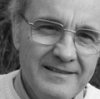 |
Jean Gabriel Trotignon
Senior research scientist, Laboratoire de Physique et Chimie de l'Environnement, Centre National de la Recherche Scientifique (CNRS), France
Born: 1949, in Oran, Algeria
PhD in physics, University of Orléans. Entered the Centre de Recherche en Physique de l'Environnement, a CNRS research lab in 1976, developing programs for analysing and interpreting geophysical data from the ISEE-1 spacecraft.
In 1984, he moved to the Laboratoire de Physique et Chimie de l'Environnement, in Orléans. Since then, he has been Co-Investigator for experiments on the Vega 1 and 2 missions to Comet Halley, then the Phobos 1 and 2 spacecraft, and for the WHISPER sounder on board ESA's Cluster satellites. In 1996, he became the Principal Investigator for the RPC/MIP of the Rosetta mission. In September 2007 he became Principal Investigator for WHISPER.
He is married to Christine, with three children. When time and weather allow, he enjoys walking, especially on Auvergne's volcanoes, skiing, and sailing in Brittany with his family.