• → European Space Agency

    • About Science & Technology

    • For Public

    • For Educators

    • ESA

    • Science & Technology

    • Hubble

    • Missions
    • Show All Missions
    • Mission Home
    • Summary
    • Fact Sheet
    • About Hubble
    • Orbit View
    • Spacecraft
    • Spacecraft
    • 3D Model
    • Hubble instruments
    • Engineering
    • Mission Operations
    • Operating Hubble
    • Launch
    • SM 1
    • SM 2
    • SM 3A
    • SM 3B
    • SM 4
    • Timeline
    • Science Operations
    • Science Archive
    • Resources
    • News Archive
    • Multimedia Gallery
    • Publication Archive
    • Calendar of Events
    • Services
    • Contact Us
    • Subscribe
    • Terms and Conditions
    • Bookmark and Share

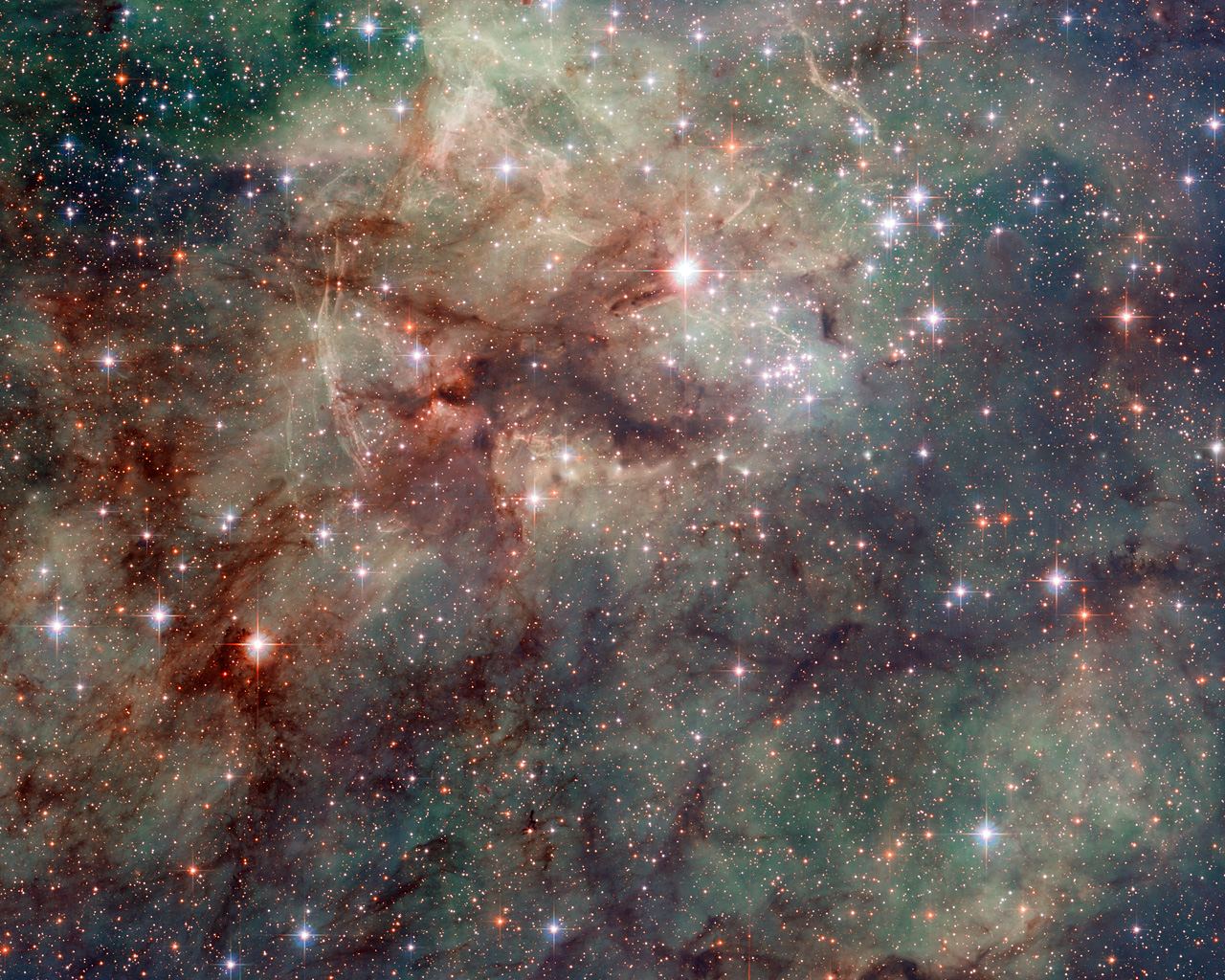
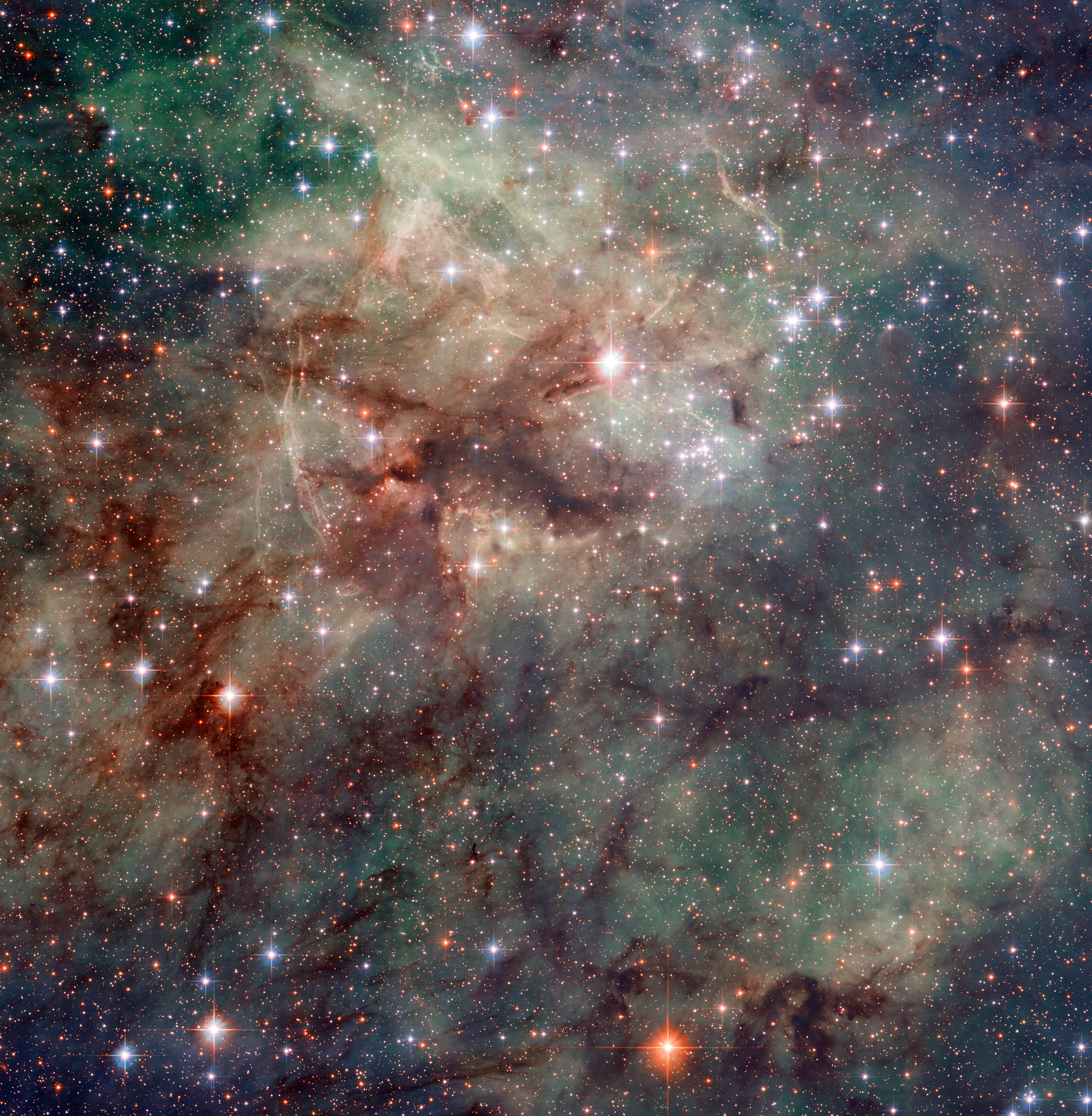
    Hubble snaps close-up of the Tarantula

    Date: 15 Mar 2011
    Depicts: 30 Doradus, NGC 2060, NGC 2070, Tarantula Nebula
    Copyright: NASA, ESA

    Hubble has taken this stunning close-up shot of part of the Tarantula Nebula. This star-forming region of ionised hydrogen gas is in the Large Magellanic Cloud, a small galaxy which neighbours the Milky Way. It is home to many extreme conditions including supernova remnants and the heaviest star ever found. The Tarantula Nebula is the most luminous nebula of its type in the local Universe.


    Last Update: 15 Mar 2011

    • Shortcut URL
    • http://sci.esa.int/jump.cfm?oid=48534
    • Latest selection
    • Wide-field image of the Ring Nebula (ground-based image)
    • The geometry and structure of the Ring Nebula
    • The region around the Ring Nebula (Hubble/LBT composite)
    • Image Hi-Res Versions
    • Hi-Res [jpg]
      7,014.12 kb.
    • Hi-Res [tif]
      33,674.70 kb.
    • Download Wallpaper
    • Wallpaper [jpg]
      858.70 kb.
    • See also
    • Hubble snaps close-up of the Tarantula [heic1105]

    Connect with us

    • RSS
    • Youtube
    • Twitter
    • Flickr
    • Google Buzz
    • Livestream
    • Subscribe
    • App Store
    • ESA Science Twitter

    Follow ESA science

    • Copyright 2000 - 2013 © European Space Agency. All rights reserved.

    • Terms and Conditions