• → European Space Agency

    • About Science & Technology

    • For Public

    • For Educators

    • ESA

    • Science & Technology

    • Venus Express

    • Missions
    • Show All Missions
    • Mission Home
    • Summary
    • Fact Sheet
    • Objectives
    • Mission Team
    • Orbit View
    • Background Science
    • Venus vs Earth
    • Venus Transits
    • Spacecraft
    • 3D Model
    • Instruments
    • Engineering
    • Mission Operations…

      • Launch Vehicle
      • Launch Campaign
      • Launch Phase
      • Cruise Phase
      • Orbit Insertion
      • Operational Orbit
      • ESOC info
      • Status Reports
    • Science Operations
    • Venus Express Science Operations
    • Data Archive
    • Resources
    • News Archive
    • Multimedia Gallery
    • Publication Archive
    • Status Report Archive
    • Calendar of Events
    • Services
    • Contact Us
    • Subscribe
    • Terms and Conditions
    • Bookmark and Share

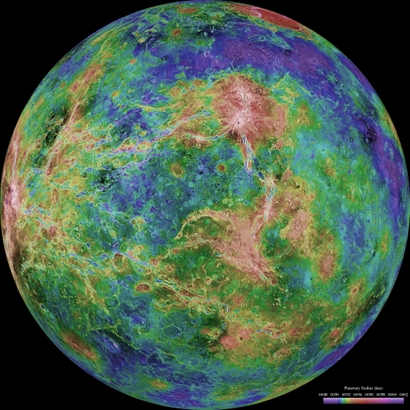
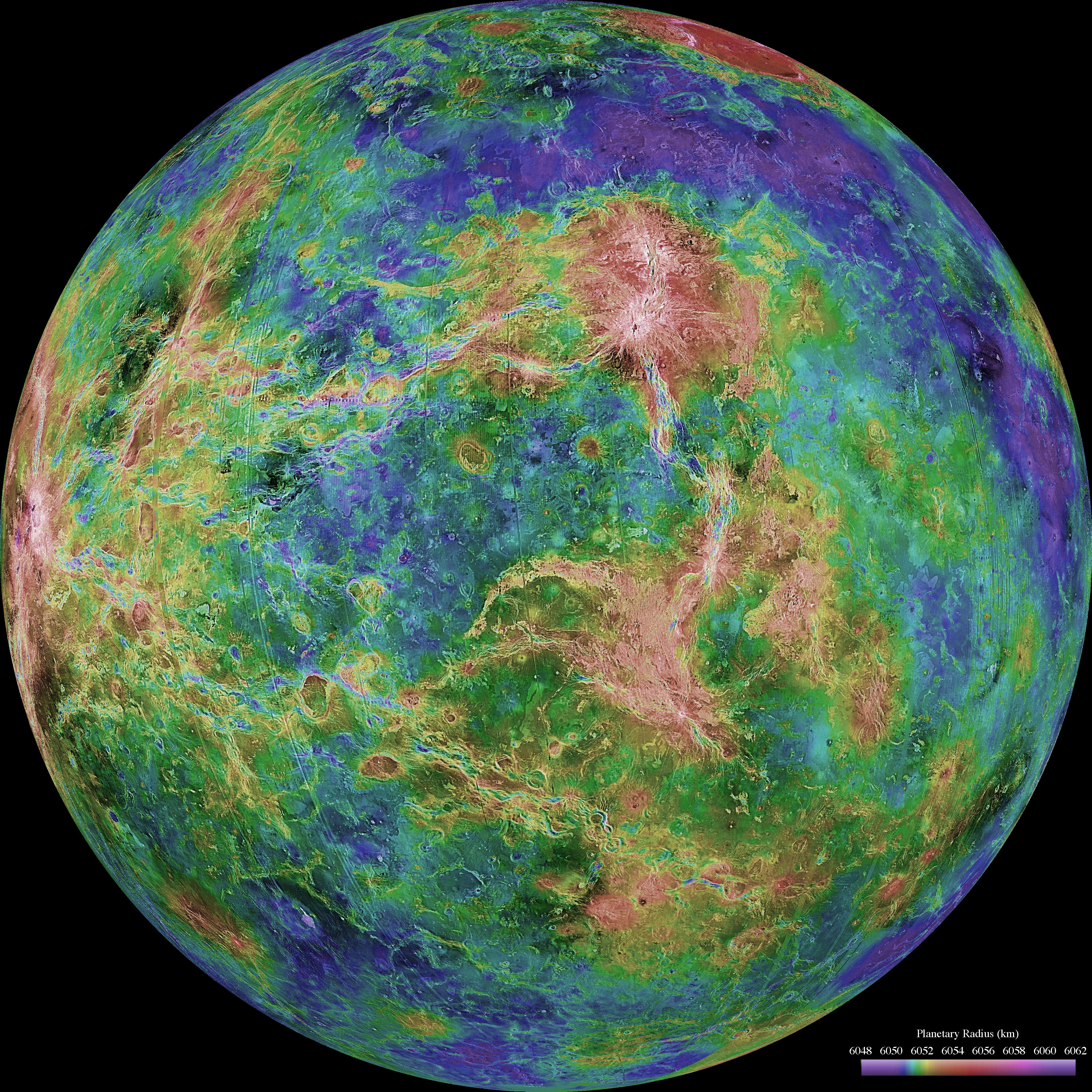
    Radar map of Venus' surface
    Date: 16 May 2012
    Copyright: NASA/JPL/USGS

    This map of the surface of Venus was created from observations accumulated during more than a decade of radar imaging of the planet. Observations made by NASA's Magellan spacecraft between 1990 and 1994 form the base of the image, with gaps in the data filled in by the Arecibo Observatory, which is based in Puerto Rico. The image is colour-coded to show elevation, using information gathered by the Magellan radar altimeter, with additional data provided by the Soviet Venera spacecraft and NASA’s Pioneer Venus missions.

    Radar images of Venus have revealed geological structures on the planet, such as steep-sided domes and rugged highland terrain, which geologists think could feature mineral-rich materials, such as felsic rocks.

    The discovery of felsic rocks on Venus would add support to the idea that the planet was once more Earth-like, as most of these materials on Earth formed in a water environment. However, other processes that don’t require the presence of water may also produce felsic rocks.

    Last Update: 17 May 2012

    • Shortcut URL
    • http://sci.esa.int/jump.cfm?oid=50372
    • Latest selection
    • Venus Express coverage of Venus (06 January 2013 until 02 February 2013)
    • Venus Express coverage of Venus
    • Change in Venus Express's local time at ascending node
    • Image Hi-Res Versions
    • Hi-Res [jpg]
      4,370.78 kb.
    • See also
    • Venus Express unearths new clues to the planet's geological history

    Connect with us

    • RSS
    • Youtube
    • Twitter
    • Flickr
    • Google Buzz
    • Livestream
    • Subscribe
    • App Store
    • ESA Science Twitter

    Follow ESA science

    • Copyright 2000 - 2013 © European Space Agency. All rights reserved.

    • Terms and Conditions