ESA Science & Technology - JWST
Fact Sheet
News
News

ESA welcomes Webb in French Guiana for launch on Ariane 5
The James Webb Space Telescope has arrived safely at Pariacabo harbour in French Guiana. ESA in close collaboration with NASA will now prepare this once in a generation mission for its launch on Ariane 5 from Europe's Spaceport this December.

Targeted launch date for Webb: 18 December 2021
ESA, NASA and Arianespace have jointly defined 18 December 2021 as the target launch date for Ariane 5 flight VA256. This third Ariane 5 launch of 2021 will fly the James Webb Space Telescope to space from Europe's Spaceport in French Guiana.
Webb passes key launch clearance review
The international James Webb Space Telescope has passed the final mission analysis review for its launch on an Ariane 5 rocket from Europe's Spaceport in French Guiana.

Selection of the first James Webb Space Telescope General Observer Scientific Programmes
The General Observer scientific observations for the NASA/ESA/CSA James Webb Space Telescope's first year of operation have been selected. Proposals from ESA member states comprise 33% of the total number of selected proposals and correspond to 30% of the available telescope time on Webb.
Announcements
From Our Partners
From Our Partners

James Webb Space Telescope has completed testing
After successful completion of its final tests, NASA's James Webb Space Telescope is being prepped for shipment to its launch site. Engineering teams have completed Webb's long-spanning comprehensive testing regimen at Northrop Grumman's facilities.

James Webb Space Telescope testing progress continues
Engineers have made considerable progress in checking off NASA's James Webb Space Telescope's final series of tests. Three big milestones have recently been completed.

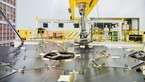
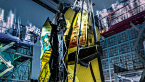
Webb's golden mirror wings open one last time on Earth
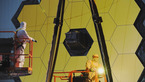
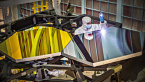
For the last time while it is on Earth, the world's largest and most powerful space science telescope opened its iconic primary mirror. This event marked a key milestone in preparing the observatory for launch later this year.

NASA's Webb Telescope packs its sunshield for a million mile trip
Engineers working on NASA's James Webb Space Telescope have successfully folded and packed its sunshield for its upcoming million-mile (roughly 1.5 million kilometre) journey, which begins later this year.
Spacecraft Testing
Spacecraft Testing

#14: Tests, moving to a new home, and more tests