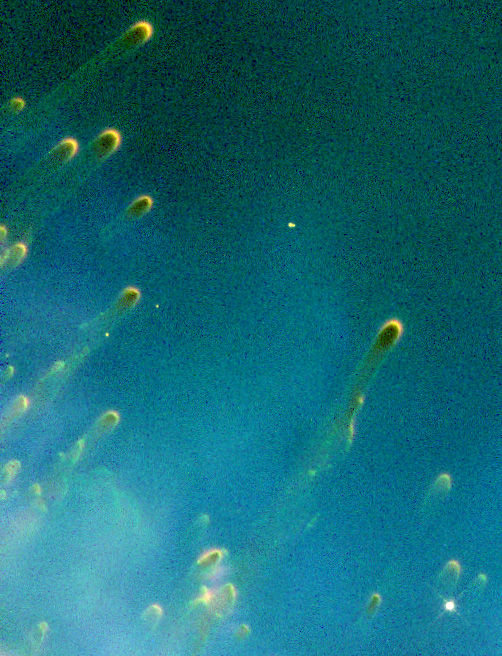
Cometary Knots around a Dying Star
 Depicts: Helix Nebula, NGC 7293, IRAS 22267-2102
Copyright: Robert O'Dell, Kerry P. Handron (Rice University, Houston, Texas) and NASA
Show in archive: true
These gigantic, tadpole-shaped objects are probably the result of a dying star's last gasps. Dubbed "cometary knots" because their glowing heads and gossamer tails resemble comets, the gaseous objects probably were formed during a star's final stages of life.
Depicts: Helix Nebula, NGC 7293, IRAS 22267-2102
Copyright: Robert O'Dell, Kerry P. Handron (Rice University, Houston, Texas) and NASA
Show in archive: true
These gigantic, tadpole-shaped objects are probably the result of a dying star's last gasps. Dubbed "cometary knots" because their glowing heads and gossamer tails resemble comets, the gaseous objects probably were formed during a star's final stages of life.
Last Update: 1 September 2019