He2-90
 Depicts: He2-90
Copyright: NASA, Raghvendra Sahai (NASA Jet Propulsion Laboratory), Lars-Ake Nyman (European Southern Observatory, Chile & Onsala Space Observatory, Sweden).
Show in archive: true
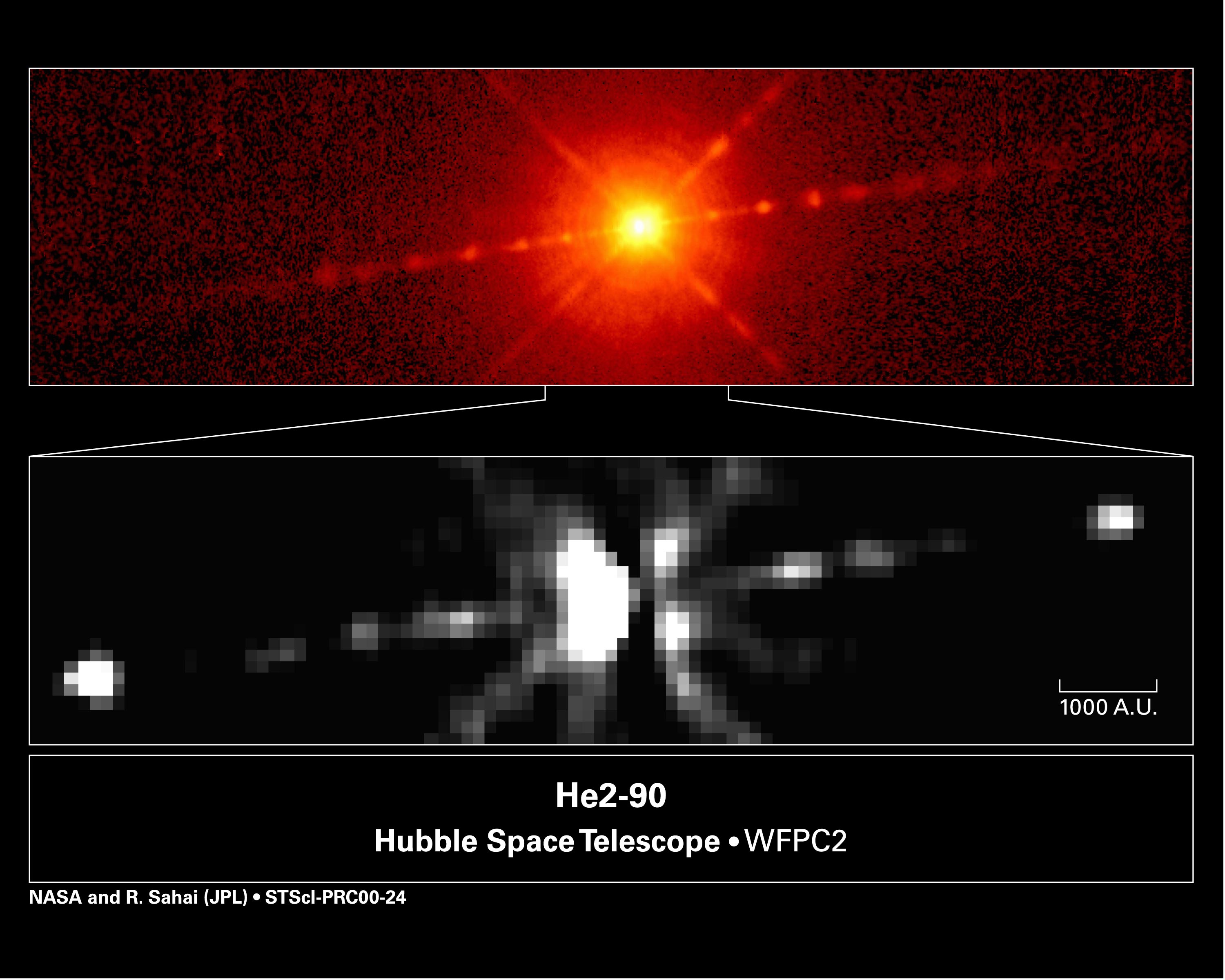
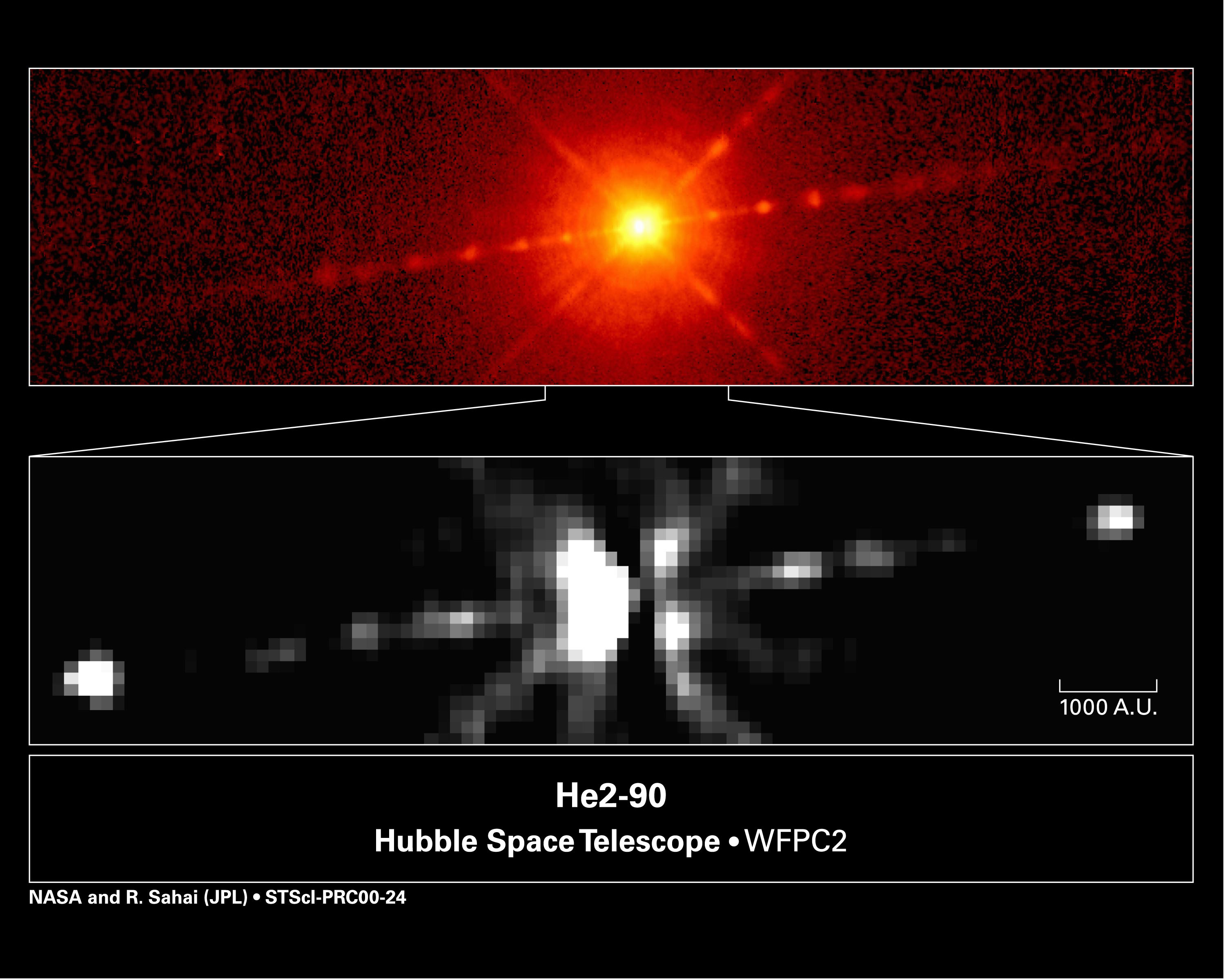
Astronomers using NASA's Hubble Space Telescope have stumbled upon a mysterious object that is
grudgingly yielding clues to its identity. A quick glance at the Hubble picture at top shows that this
celestial body, called He2-90, looks like a young, dust-enshrouded star with narrow jets of material
streaming from each side. But it's not. The object is classified as a planetary nebula, the glowing remains
of a dying, lightweight star. But the Hubble observations suggest that it may not fit that classification, either.
Depicts: He2-90
Copyright: NASA, Raghvendra Sahai (NASA Jet Propulsion Laboratory), Lars-Ake Nyman (European Southern Observatory, Chile & Onsala Space Observatory, Sweden).
Show in archive: true
Astronomers using NASA's Hubble Space Telescope have stumbled upon a mysterious object that is
grudgingly yielding clues to its identity. A quick glance at the Hubble picture at top shows that this
celestial body, called He2-90, looks like a young, dust-enshrouded star with narrow jets of material
streaming from each side. But it's not. The object is classified as a planetary nebula, the glowing remains
of a dying, lightweight star. But the Hubble observations suggest that it may not fit that classification, either.
Last Update: 1 September 2019