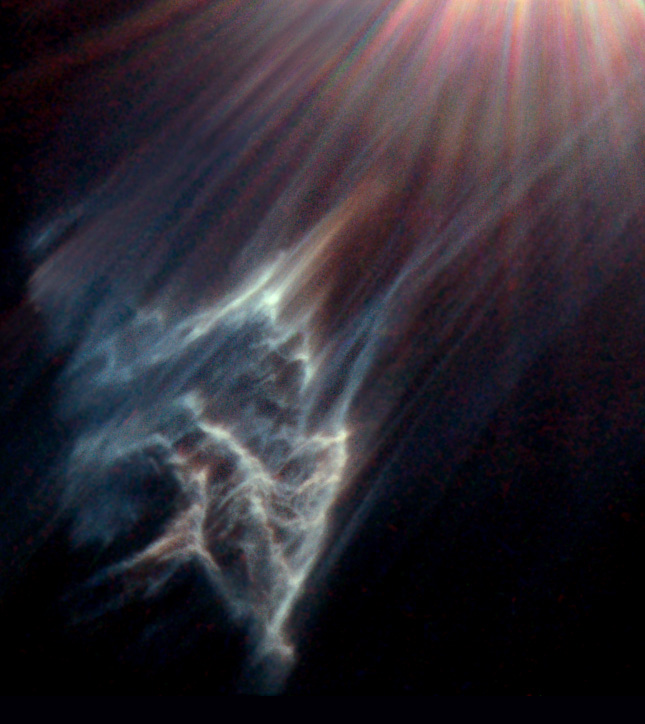
Ghostly Reflections in the Pleiades
 Depicts: IC 349
"Barnard's Merope Nebula"
The Pleiades
Copyright: NASA and The Hubble Heritage Team (STScI/AURA), George Herbig and Theodore Simon (University of Hawaii).
Show in archive: true
The Hubble Space Telescope has caught the eerie, wispy tendrils of a dark interstellar cloud being destroyed by the passage of one of the brightest stars in the Pleiades star cluster. Like a flashlight beam shining off the wall of a cave, the star is reflecting light off the surface of pitch black clouds of cold gas laced with dust. These are
called reflection nebulae.
Last Update: 1 September 2019