A Portrait of R136
 Depicts: R136, 30 Doradus Nebula
Copyright: NASA, N. Walborn and J. Mamz-Apellaniz (Space Telescope Science Institute, Baltimore, MD), R. Barba (La Plata Observatory, La Plata, Argentina)
Show in archive: true
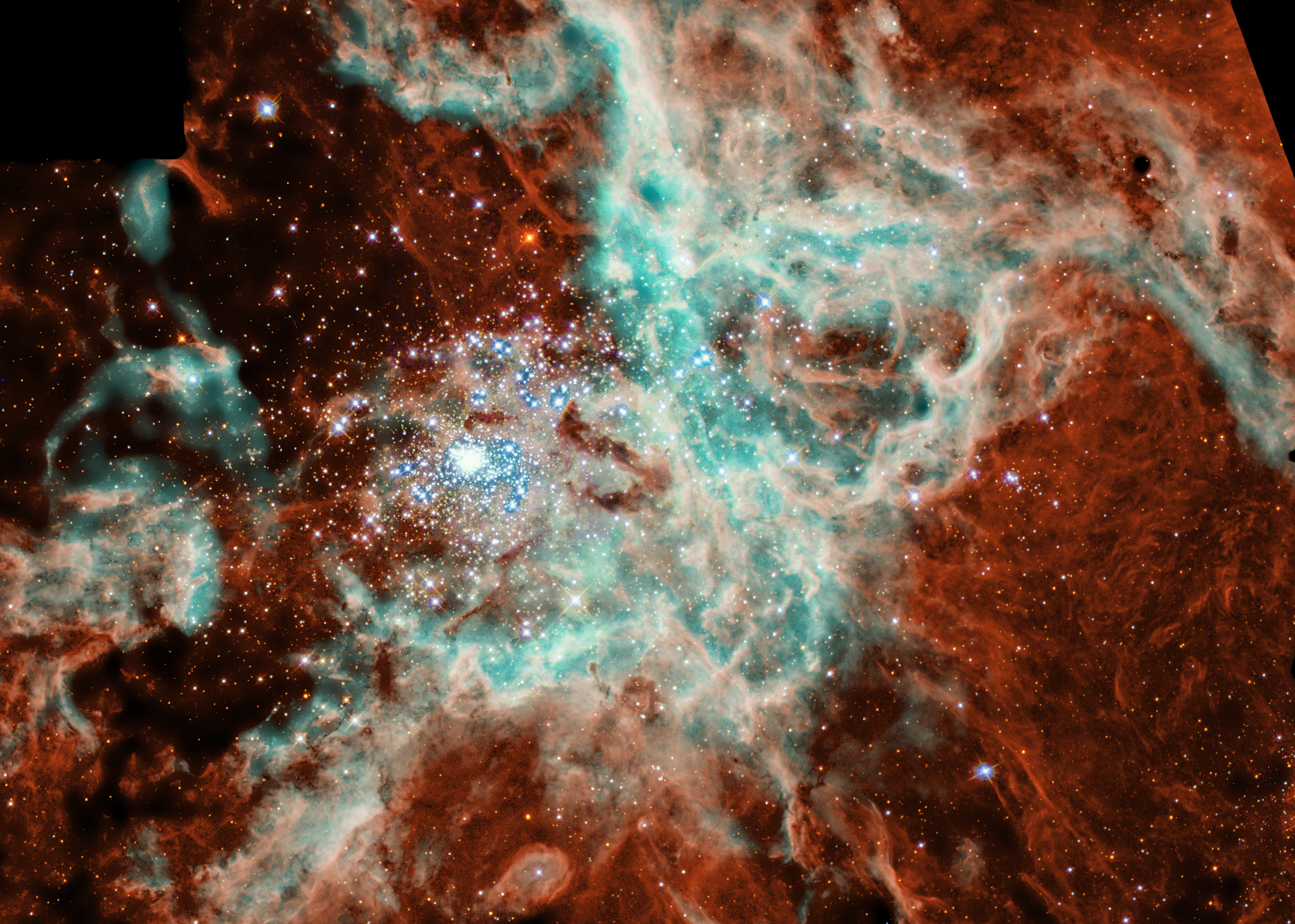
The NASA/ESA Hubble Space Telescope has snapped a panoramic portrait of a vast, sculpted landscape of gas and dust where thousands of stars are being born. This fertile star-forming region, called the 30 Doradus Nebula, has a sparkling stellar centerpiece: the most spectacular cluster of massive stars in our cosmic neighborhood of about 25 galaxies. The mosaic picture shows that ultraviolet radiation and high-speed material unleashed by the stars in the cluster, called R136 [the large blue blob left of center], are weaving a tapestry of creation and destruction, triggering the collapse of looming gas and dust clouds and forming pillar-like structures that are incubators for nascent stars.
Depicts: R136, 30 Doradus Nebula
Copyright: NASA, N. Walborn and J. Mamz-Apellaniz (Space Telescope Science Institute, Baltimore, MD), R. Barba (La Plata Observatory, La Plata, Argentina)
Show in archive: true
The NASA/ESA Hubble Space Telescope has snapped a panoramic portrait of a vast, sculpted landscape of gas and dust where thousands of stars are being born. This fertile star-forming region, called the 30 Doradus Nebula, has a sparkling stellar centerpiece: the most spectacular cluster of massive stars in our cosmic neighborhood of about 25 galaxies. The mosaic picture shows that ultraviolet radiation and high-speed material unleashed by the stars in the cluster, called R136 [the large blue blob left of center], are weaving a tapestry of creation and destruction, triggering the collapse of looming gas and dust clouds and forming pillar-like structures that are incubators for nascent stars.
Last Update: 1 September 2019