Saturn's Dynamic Aurorae
 Date: 23 January 2004
Satellite: Hubble Space Telescope
Depicts: Saturn's Aurorae
Copyright: NASA, ESA, J. Clarke (Boston University, USA), and Z. Levay (STScI)
Show in archive: true
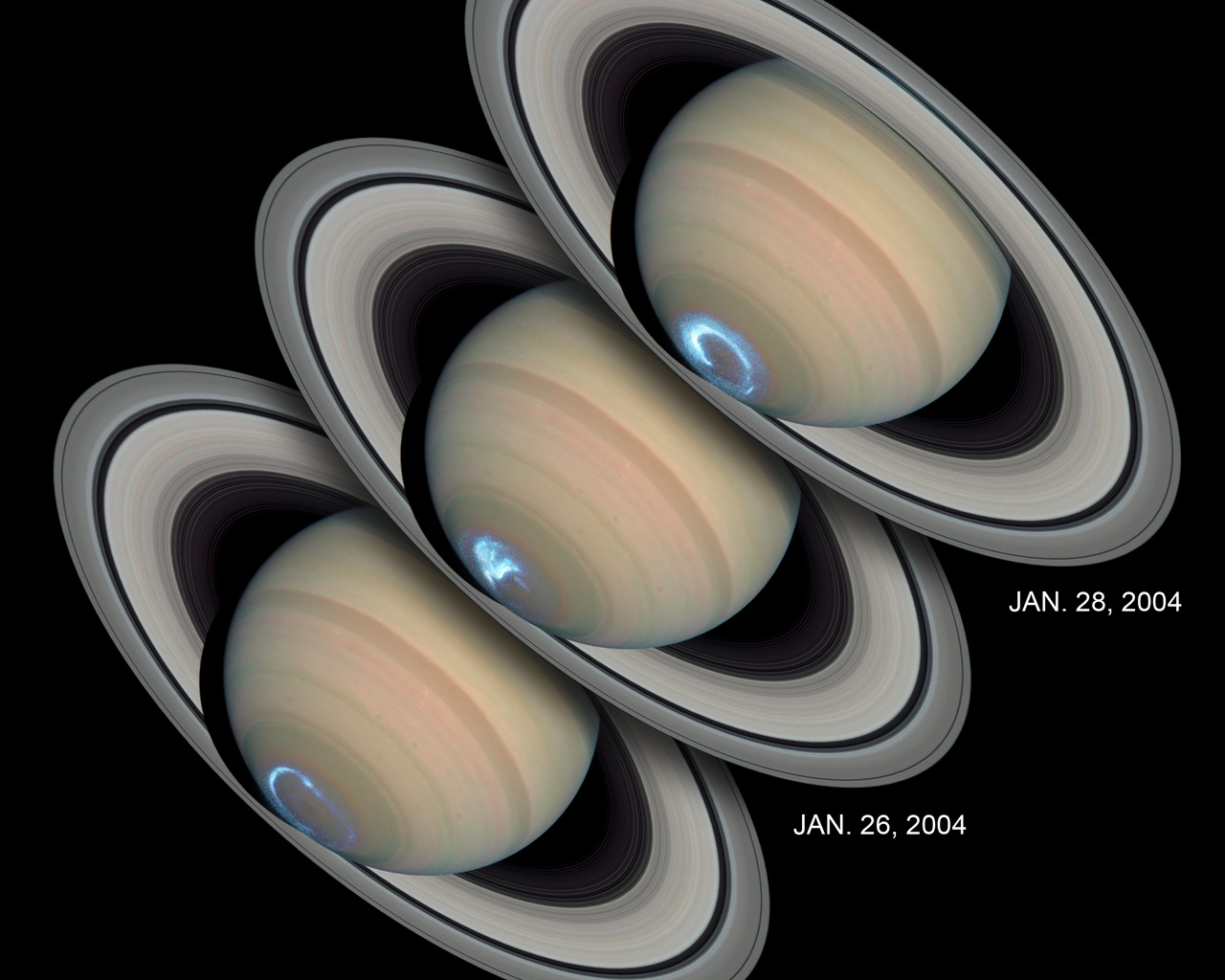
These images reveal the dynamic nature of Saturn's aurorae. Viewing the planet's southern polar region for several days, ESA/NASA Hubble Space Telescope snapped a series of photographs of the aurora dancing in the sky. The snapshots show that Saturn's aurorae differ in character from day to day, as they do on Earth, moving around on some days and remaining stationary on others. But compared with Earth, where auroral storms develop in about 10 minutes and may last for a few hours, Saturn's auroral displays always appear bright and may last for several days.
Date: 23 January 2004
Satellite: Hubble Space Telescope
Depicts: Saturn's Aurorae
Copyright: NASA, ESA, J. Clarke (Boston University, USA), and Z. Levay (STScI)
Show in archive: true
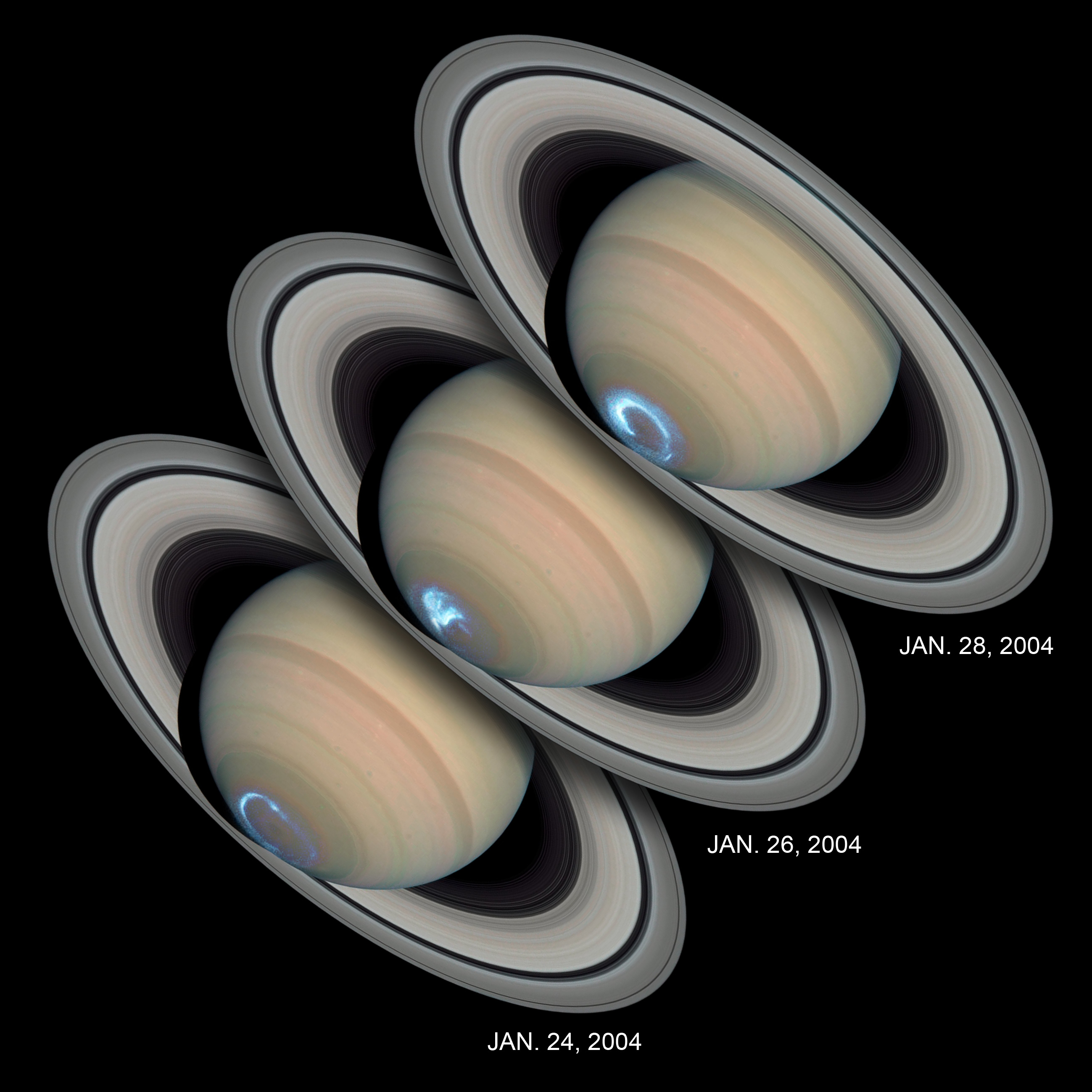
These images reveal the dynamic nature of Saturn's aurorae. Viewing the planet's southern polar region for several days, ESA/NASA Hubble Space Telescope snapped a series of photographs of the aurora dancing in the sky. The snapshots show that Saturn's aurorae differ in character from day to day, as they do on Earth, moving around on some days and remaining stationary on others. But compared with Earth, where auroral storms develop in about 10 minutes and may last for a few hours, Saturn's auroral displays always appear bright and may last for several days.
Last Update: 1 September 2019