Mass Segregation in Globular Cluster 47 Tucanae
 Date: 25 October 2006
Satellite: Hubble Space Telescope
Depicts: 47 Tucanae
Copyright: NASA, ESA, and G. Meylan (École Polytechnique Federale de Lausanne)
Show in archive: true
A seven year study with the NASA/ESA Hubble Space Telescope has provided astronomers with the best observational evidence yet that globular clusters sort out stars according to their mass, governed by the gravitational interaction between the stars. Heavier stars slow down and sink to the cluster's core, while lighter stars pick up speed and move across the cluster to its periphery. This process, called mass segregation, has long been suspected for globular star clusters, but has never before been directly seen in action.
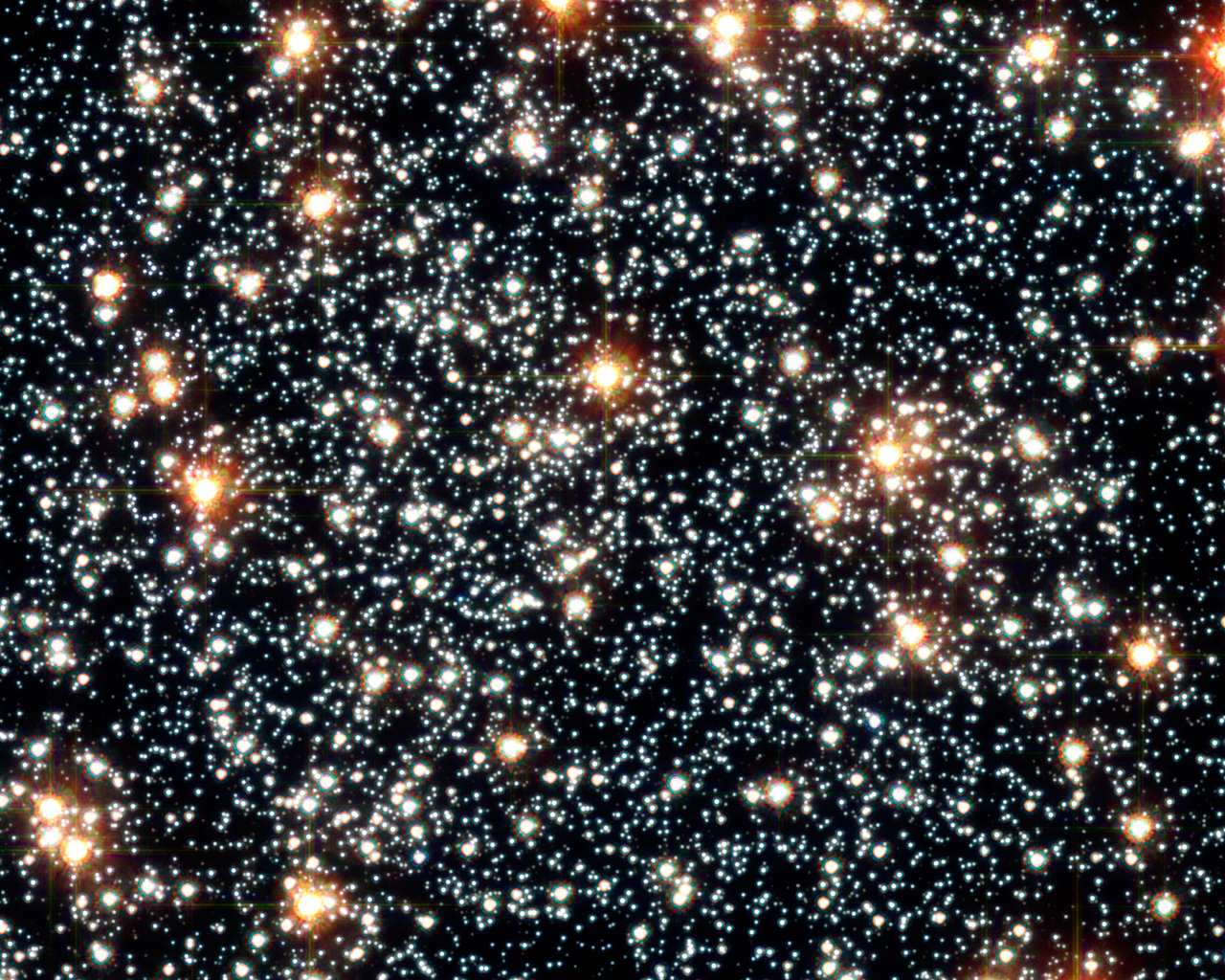
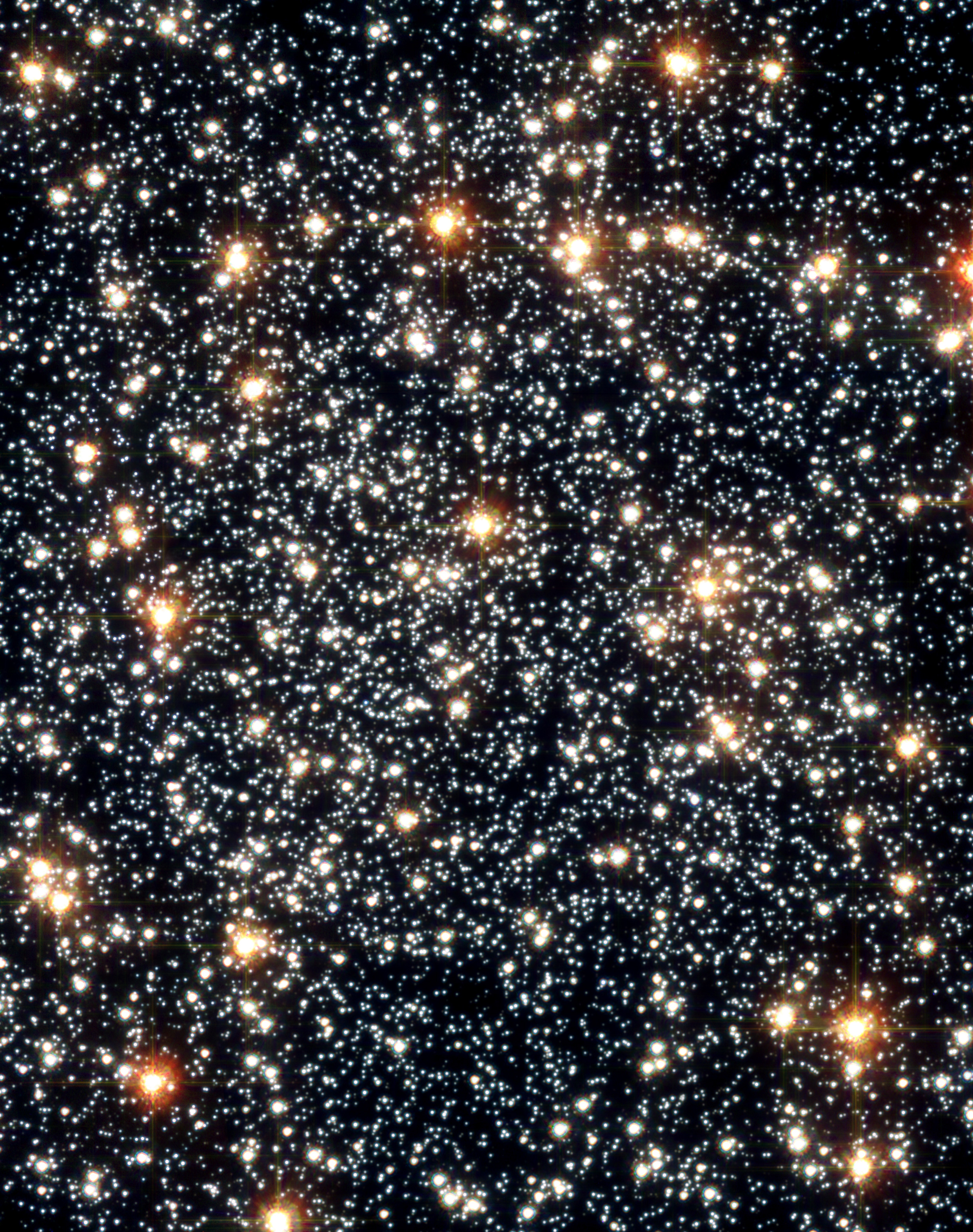
This image shows the core of globular cluster 47 Tucanae. Multiple photos of this region allowed astronomers to track the proper motions of the individual stars. Precise velocities were obtained for nearly 15 000 stars in the cluster. This image was taken with Hubble's Advanced Camera for Surveys.
Date: 25 October 2006
Satellite: Hubble Space Telescope
Depicts: 47 Tucanae
Copyright: NASA, ESA, and G. Meylan (École Polytechnique Federale de Lausanne)
Show in archive: true
A seven year study with the NASA/ESA Hubble Space Telescope has provided astronomers with the best observational evidence yet that globular clusters sort out stars according to their mass, governed by the gravitational interaction between the stars. Heavier stars slow down and sink to the cluster's core, while lighter stars pick up speed and move across the cluster to its periphery. This process, called mass segregation, has long been suspected for globular star clusters, but has never before been directly seen in action.
This image shows the core of globular cluster 47 Tucanae. Multiple photos of this region allowed astronomers to track the proper motions of the individual stars. Precise velocities were obtained for nearly 15 000 stars in the cluster. This image was taken with Hubble's Advanced Camera for Surveys.
Last Update: 1 September 2019