How cliff collapse generates comet activity
 Date: 23 September 2016
Satellite: Rosetta
Copyright: Based on J.-B. Vincent et al. (2015)
Show in archive: true
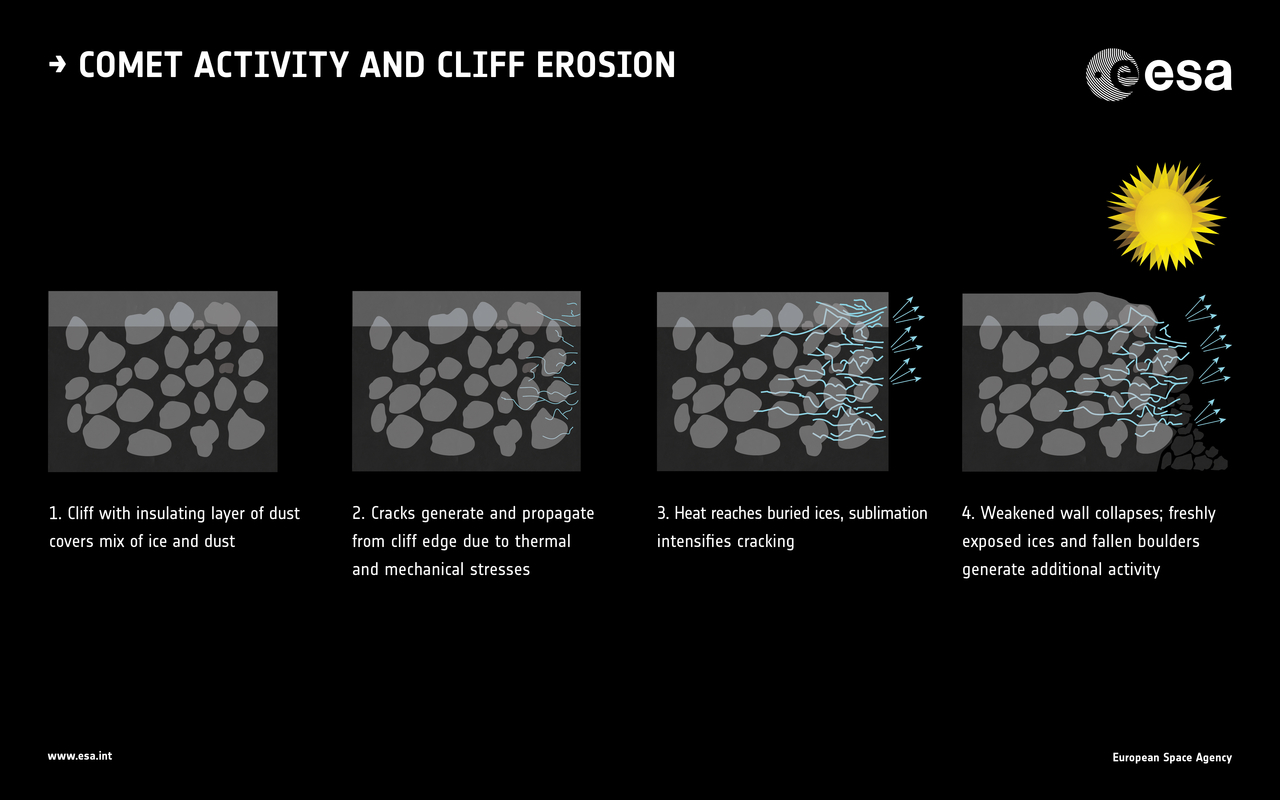
Much of the comet's regular activity can be linked back to the steady erosion of cliff walls that are initially fractured by thermal or mechanical erosion. These fractures propagate into the underlying mixture of ice and dust. As the ices sublimate, the gases escape through the fractures, acting a bit like nozzles to focus the gas flows and picking up dust a long the way to create the distinct collimated jets observed in Rosetta's images. Continued cracking, heating and sublimation eventually leads to sudden collapse of the cliff wall – the likely source of more-transient outburst events. At the same time, the debris that falls to the foot of the cliff also exposes previously hidden material, contributing to the observed outflow.
Date: 23 September 2016
Satellite: Rosetta
Copyright: Based on J.-B. Vincent et al. (2015)
Show in archive: true
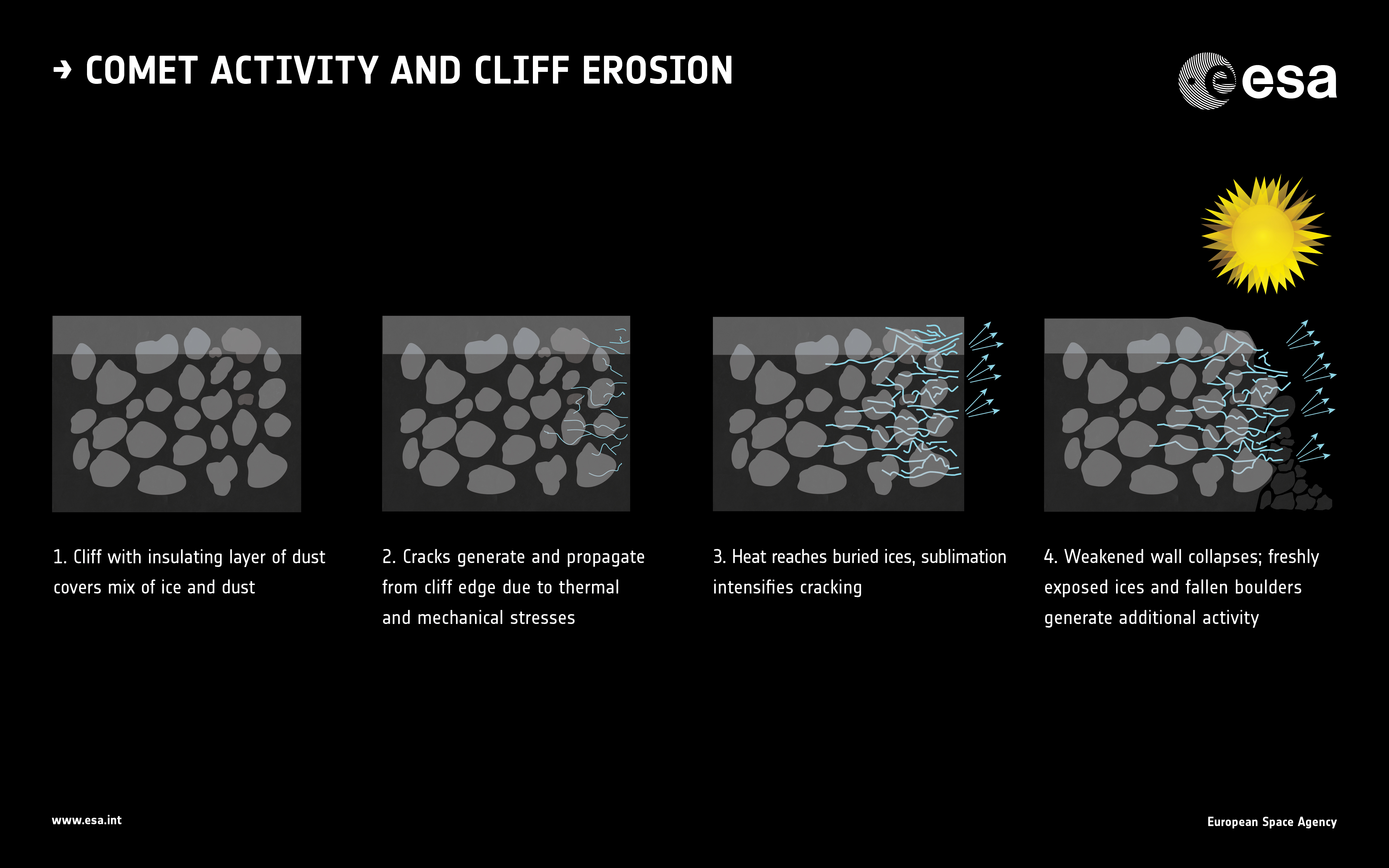
Much of the comet's regular activity can be linked back to the steady erosion of cliff walls that are initially fractured by thermal or mechanical erosion. These fractures propagate into the underlying mixture of ice and dust. As the ices sublimate, the gases escape through the fractures, acting a bit like nozzles to focus the gas flows and picking up dust a long the way to create the distinct collimated jets observed in Rosetta's images. Continued cracking, heating and sublimation eventually leads to sudden collapse of the cliff wall – the likely source of more-transient outburst events. At the same time, the debris that falls to the foot of the cliff also exposes previously hidden material, contributing to the observed outflow.
Last Update: 1 September 2019