Currently, sci.esa.int is under review and not being updated. For the latest information and news from ESA science missions and scientific results, please visit esa.int. For a comprehensive overview of ESA’s Science Programme and its missions, please refer to science.esa.int. For in-depth technical information aimed at ESA's scientific communities, you may also wish to consult cosmos.esa.int.

Asset Publisher

Back Comet pit formation

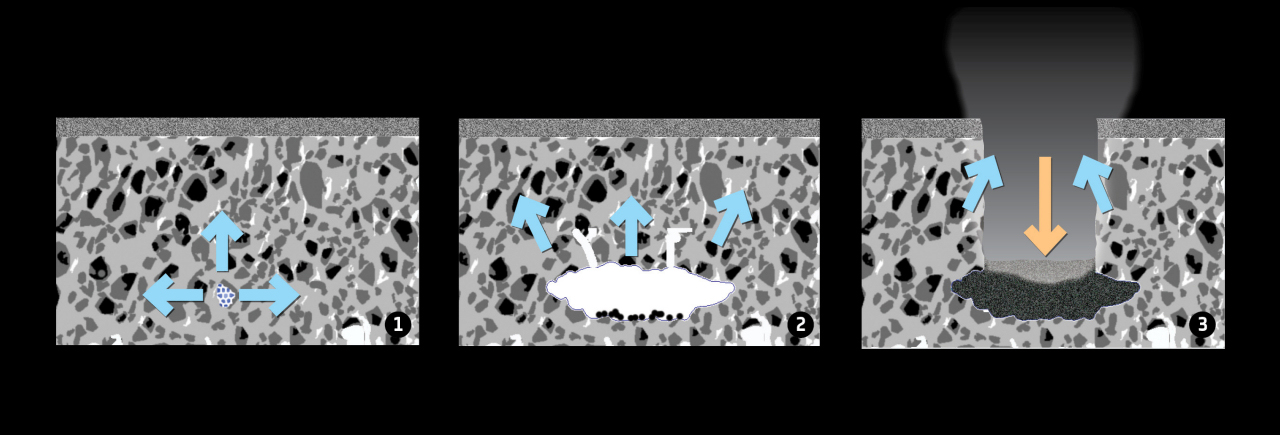
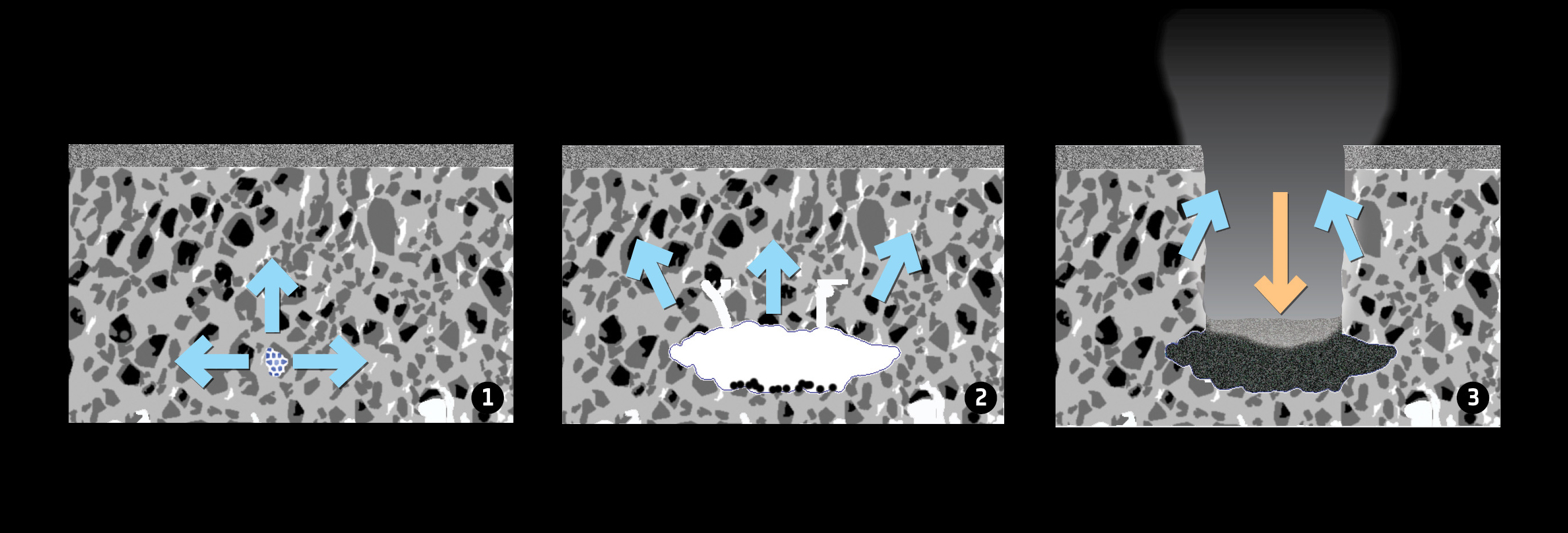
Comet pit formation


Date: 01 June 2015
Satellite: Rosetta
Copyright: ESA/Rosetta/J-B Vincent et al. (2015)

Graphic explaining how Comet 67P/Churyumov–Gerasimenko’s pits may form through sinkhole collapse. The graphic shows a dusty surface layer covering a mixture of dust and ices. 1. Heat causes subsurface ices to sublimate (blue arrows), forming a cavity (2). When the ceiling becomes too weak to support its own weight, it collapses, creating a deep, circular pit (3, red arrow). Newly exposed material in the pit walls sublimates, accounting for the observed activity (3, blue arrows).

Last Update: 1 September 2019
16-Mar-2026 11:32 UT

ShortUrl Portlet

Shortcut URL

https://sci.esa.int/s/wRVYxjw

Also Available As

Related Images

Related Videos

Related Publications

Related Links

Documentation

Further Readings